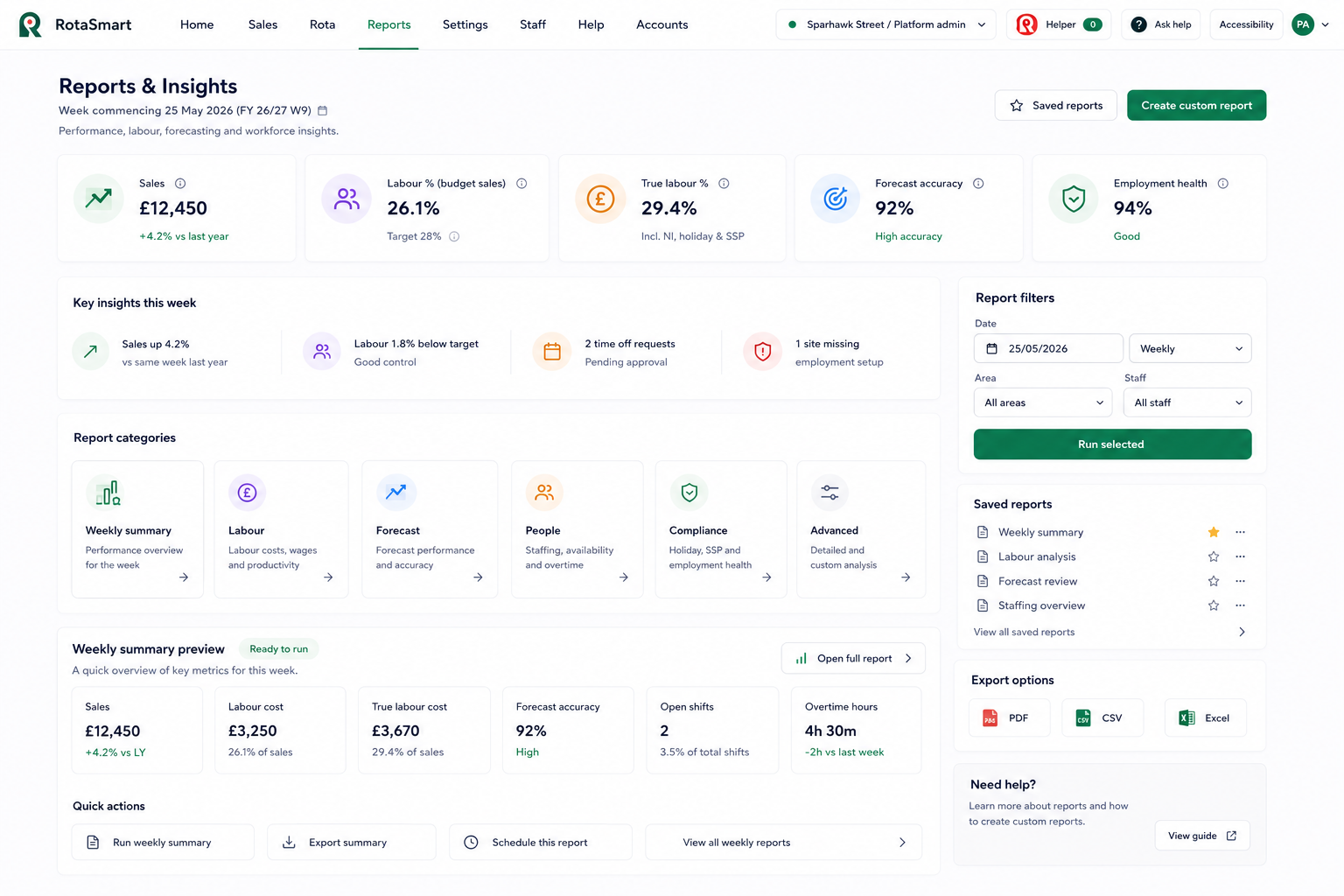
See margin risk before it lands on payroll
See forecast, staffing demand, rota cost, and wage percentage together so you can tighten the expensive parts of the week before overspend turns into payroll reality.
Where margin leaks out of the rota
The commercial problem usually appears before the rota goes live. These are the three places operators lose control first.
What drives labour overspend
How overspend creeps in
By the time the rota is live, managers are already making reactive fixes instead of controlled decisions. The week then becomes a series of small compromises rather than a commercially planned labour model.
- Shifts reused from last week without demand context
- Wage percentage checked after the rota is mostly fixed
- Peak periods over-covered through caution
- Quiet periods left too heavy because nobody trimmed them early
What better control looks like
The goal is not simply to cut hours. It is to align staffing to expected demand so service is protected where it matters, wasted hours are easier to remove, and managers can explain the labour decision clearly.
- Stronger commercial decisions before publish
- Better visibility into when to spend and when to trim
- Coverage reviewed alongside cost
- Less reactive labour control during the week
The tools that help you stay closer to budget
Use the builder to get to a workable rota faster
Labour cost control is weaker when managers have to choose between spreadsheets, schedules, and separate reporting. Rota Smart keeps the important numbers together so decisions can be made in one place, which is especially important when small percentage changes have a material effect on weekly margin.
- Rota cost visible while building
- Wage percentage checked before publish
- Coverage problems visible alongside spend
- Commercial decisions made earlier in the rota build
Use fairness and fatigue to avoid fragile weeks
Better labour control does not mean blunt cuts. Good scheduling still has to account for availability, fairness, fatigue, and repeated heavy patterns so operators do not solve a margin problem by creating a service or retention problem.
- Availability and time off checked during planning
- Fairness and fatigue remain part of the decision
- Avoid loading the same people repeatedly
- Coverage stays visible while costs are being controlled
Useful across pubs, bars, restaurants, and multi-site groups
What tighter labour control looks like
Set the target
Add forecast and labour target.
Build the first draft
Use the builder to get to a workable rota quickly.
Tighten the heavy points
Adjust the expensive parts of the week while cost is still visible.
Look ahead at risk
Review availability, fairness, fatigue, and open gaps.
Keep the week cleaner
Use the shift market to reduce manual fixes once the rota is live.
What people usually want to settle before they book
Will it justify the spend?
The point is not another dashboard. It is faster rota control, earlier wage visibility, and fewer expensive decisions left until payroll is already moving.
How quickly can this be used properly?
It fits the weekly planning routine managers already run, so the first live week can be shaped without turning it into a heavy change project.
Will tighter control hurt the team?
Good control is not blunt cutting. Availability, fairness, and fatigue stay visible so managers can protect service and team sustainability while still trimming waste.
Questions owners and GMs ask about labour control
What makes this worth the spend?
It is there to save time, reduce admin, and help managers make better labour decisions before the week is locked in.
How does it improve labour control?
It helps managers make better decisions before publish by showing where the rota is heavy, where demand is light, and how the week is tracking against forecast and labour target.
Is this just about cutting hours?
No. The point is to put hours where they do the job and remove wasted hours where they do not, without weakening service where trade actually needs support.
Why do fairness and fatigue matter in a margin conversation?
Because a rota that looks efficient on paper can still become fragile if the same people are overloaded. Fairness and fatigue help flag that earlier.
Explore related pages
See the week before the margin slips
We will walk through a live example showing forecast, staffing demand, rota cost, wage percentage, and the builder together so you can see where overspend usually starts. Introductory pricing is currently available for early customers.