
RotaSmart blog
People-first leadership: engaging your hospitality team
Why fair scheduling, fatigue awareness and staff control matter for hospitality retention and morale.

Operational insight
Staff changes are easier to manage when requests, offers, swaps, availability, and clocking stay connected to the week.
Operator checklist
- Check availability before filling difficult shifts.
- Keep time off and rota changes in an approved route.
- Review late finishes, fairness, and fatigue risk.
- Use signed-off actuals before payroll review.
Quick answer
Better staff engagement starts with fairer rotas, clearer communication and fewer avoidable fatigue patterns. Scheduling is a people issue as much as an operations issue.
In pubs, cafes and bars, engaged staff create the atmosphere guests remember. Human-centric leadership, fair scheduling and attention to wellbeing improve retention and morale.
The weekly rota is one of the clearest signals of how a venue treats its team.
Why it matters
Front-line hospitality roles can be stressful. Unpredictable shift patterns can lead to burnout and turnover, which are expensive to replace.
Younger staff increasingly expect flatter communication, more control and better support around work-life balance.
Industry insight
Modern leaders need to combine empathy with data. Predictive scheduling can reveal patterns of overworking and help managers redistribute shifts.
Offering growth opportunities, recognising good work and giving staff clearer control builds community and reduces churn.
How RotaSmart helps
RotaSmart supports people-first leadership by checking for consecutive shifts, overtime and fatigue risk during rota planning.
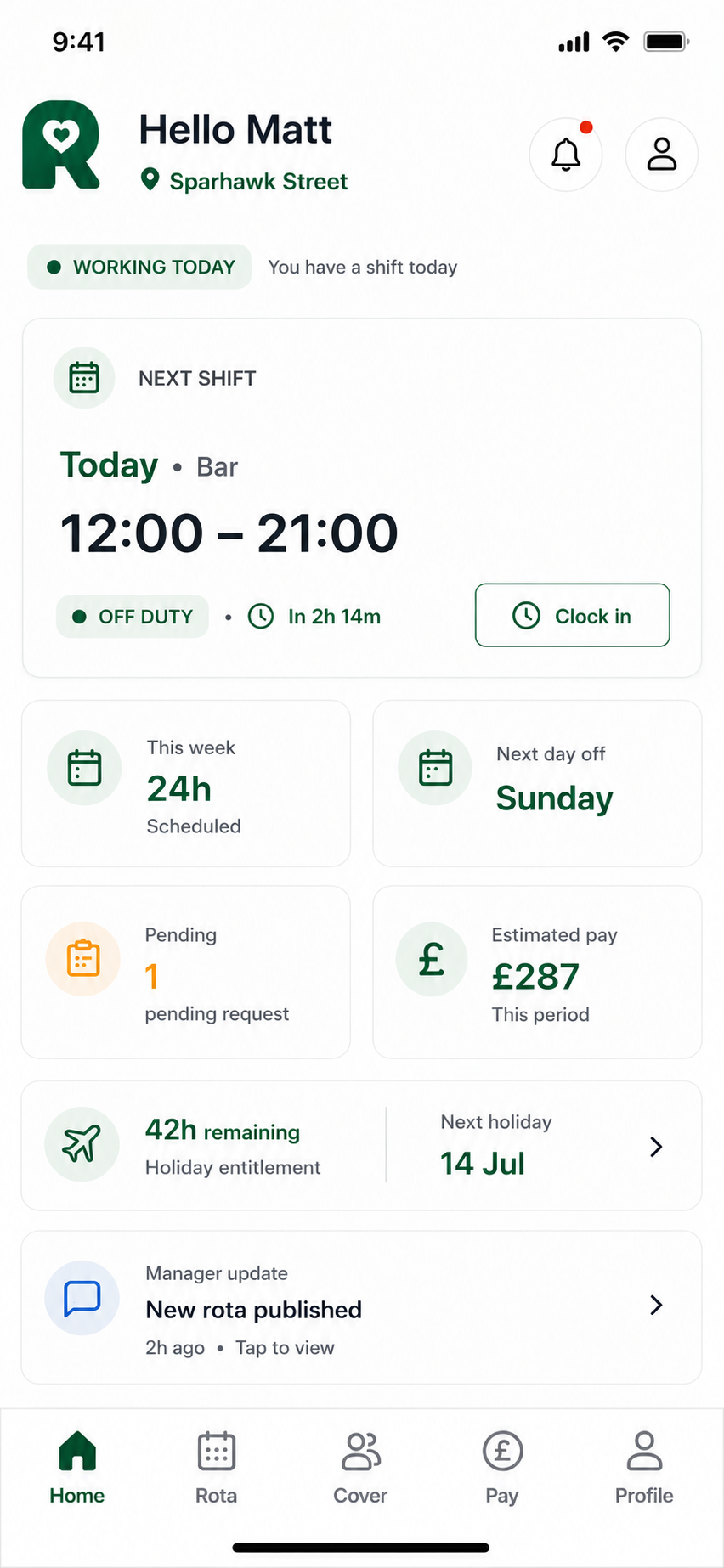
Employees can view shifts, availability and requests through RotaSmart Team, while managers can use staff availability and time-off management before publishing.
Want a rota that works better for the team and the business? Book a demo.
Want to see this on your own week?
Walk through forecast, rota build, labour cost, wage percentage, and staff app flow with RotaSmart.