RotaSmart RotaSmart
Feature: labour forecasting

Labour forecasting that turns expected trade into staffing demand

RotaSmart connects forecast sales, trading context, and staffing rules so managers can see labour pressure before they place shifts.

Keep planning from here
Forecast, rota, and wage percentage in one weekly viewBuilt for pubs, bars, cafes, food-led venues, and small groupsStaff requests and shift changes stay controlled
Rota speed
Faster
Labour view
Earlier
Staff changes
Controlled
Labour forecasting
Weekly view
See forecast, demand, rota cost, wage percentage, and staff changes in the same weekly view.
Planning view
Weekly
Built around the week managers already work through.
Cover
In view
Demand and gaps stay close to the rota.
Wage %
Checked early
Cost pressure is shown while changes are still possible.
Staff changes
Tracked
Requests and swaps stay with the weekly rota.

Sales forecast and labour forecast are different decisions

Sales forecast
Trade

Expected wet, food, events, daypart shape, and actuals.

Labour forecast
Cover

The staffing demand created by that trade shape.

Rota
People

Named shifts, availability, time off, and open gaps.

Actuals
Review

Variance feeds the next planning conversation.

Forecast-first workflow

01

Set expected trade

Use sales, daypart shape, events, and known context.

02

Translate into demand

Turn the forecast into staffing pressure by role or area.

03

Build the rota

Place shifts where demand and people constraints overlap.

04

Compare actuals

Use variance to improve the next forecast and rota.
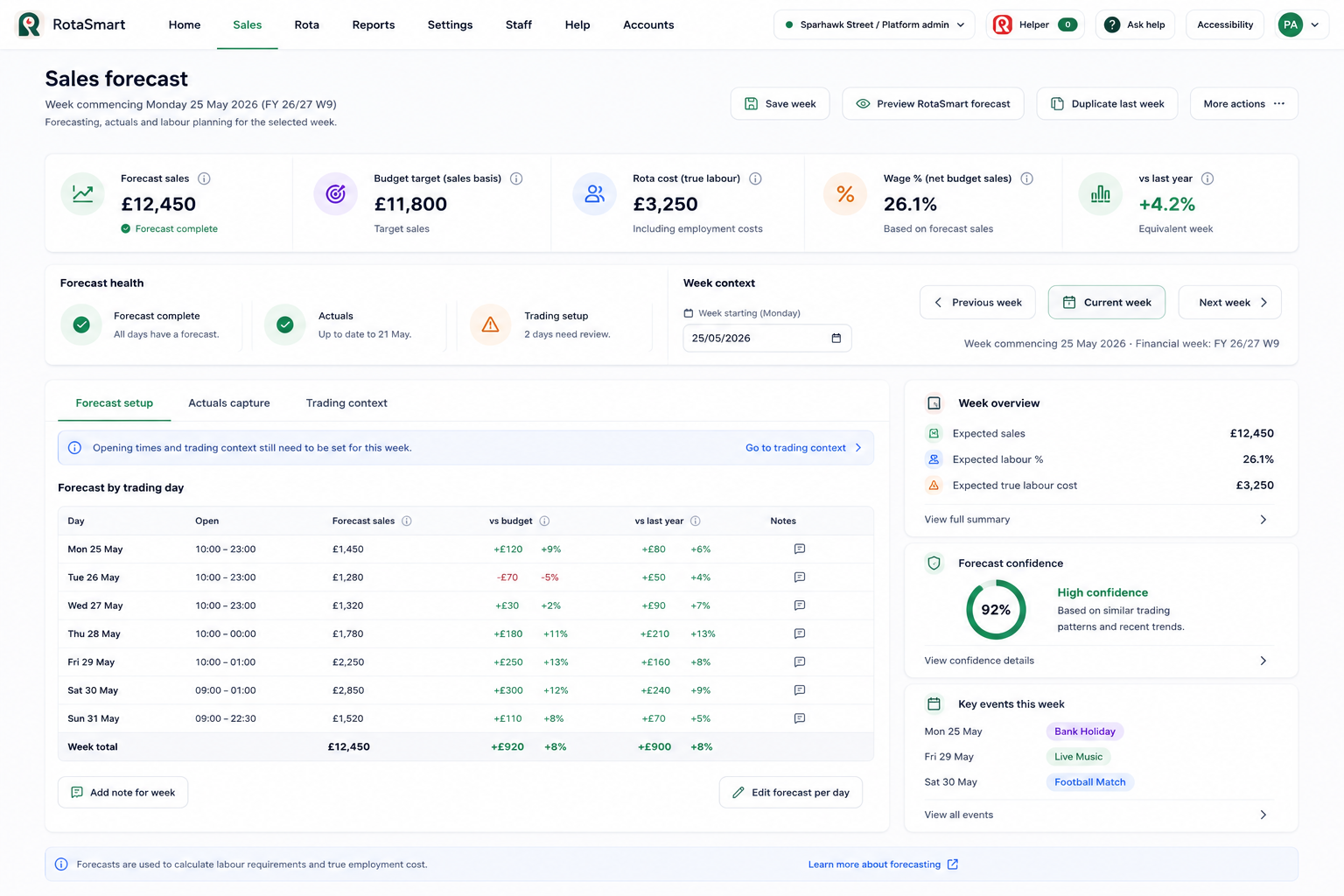
Forecast and demand views before the rota

RotaSmart labour forecasting screen showing staffing demand by role and daypart before shifts are placed
Labour forecasting

Shape labour around demand and weekly results

Forecast, actuals, rota cost, and wage percentage all feed into the staffing decision.

Why the forecast needs to sit before the rota

What makes the week difficult

Hospitality rotas change quickly, and managers need a simple way to connect trade, cover, cost, and people decisions before the week goes live.

  • The rota is copied from habit instead of trade shape
  • Labour cost is checked after shifts are already placed
  • Staff changes land in separate messages
  • Coverage gaps are noticed too close to service

What better control looks like

RotaSmart keeps forecast, staffing demand, rota cost, availability, and staff changes close together so managers can improve the week earlier.

  • Demand shown before shifts are shared
  • Wage percentage checked while editing
  • Availability and time off checked in the same weekly view
  • Staff requests and swaps kept under manager control

Forecast inputs that change staffing decisions

Sales-linked demand
Forecast trade becomes the brief for staffing needs.
Event context
Known uplift can affect cover before the week goes live.
Sales mix
Wet and food sales can create different staffing pressure.
Actual learning
Actual sales show where forecast confidence needs review.

Trading inputs this can reflect

Pubs
Plan around weekends, events, food service, late closes, and quiet starts.
Bars
Keep late trading, peak cover, staff changes, and wage pressure in one view.
Cafes
Shape cover around breakfast, lunch, prep, close-down, and lighter trading periods.
Small groups
Keep rota planning consistent across sites without adding a heavy process.

From forecast to staffing demand

01

Add expected trade

Set sales, events, and trading context.

02

Create demand

Turn forecast into staffing pressure by day and period.

03

Build shifts

Build shifts with demand beside the rota builder.

04

Review actuals

Compare forecast back to real trade.

Forecasting questions before the rota changes

Will this add more admin?

RotaSmart follows the weekly rota process managers already know, instead of making them run a separate planning project.

Will it work for changing weeks?

Forecast, availability, and staff changes can move together while the rota can still change.

Will staff actually use it?

RotaSmart Team gives staff one place for shifts, requests, offers, swaps, and clock-in without exposing the manager system.

Questions about labour forecasting

What is labour forecasting?

It is the process of estimating staffing need before the rota is built, using expected trade and operating context.

Does it automatically publish shifts?

No. It gives managers demand context so they can build and adjust the rota.

Can events affect demand?

Yes. Known events and trading context can be included in the planning view.

Keep planning from here

See forecast, demand, and rota cost together

We will walk through a live weekly example with forecast, staffing demand, rota cost, wage percentage, availability, and staff changes together. Introductory pricing is currently available for early customers.

Forecast and demand view
Rota builder and wage percentage
RotaSmart Team staff flow
Back to homepage