
RotaSmart blog
Keeping margins healthy: profit discipline for pubs, bars and cafes
How pubs, bars and cafes can protect margin by matching labour to forecast trade before the rota goes live.

Operational insight
The useful moment is before publish, when managers can still move hours, protect peaks, and keep wage percentage under control.
Operator checklist
- Set expected sales for the week.
- Check planned labour cost before publishing.
- Review quiet-period cover separately from peak cover.
- Record the reason for any planned overspend.
Quick answer
Rising labour and operating costs mean hospitality venues need to plan for profit, not just revenue. Forecast-led rotas help keep staffing, wage percentage and expected trade aligned.
Rising labour and operating costs mean that relying on higher menu prices alone will not keep margins healthy. Independent venues need to shift from chasing revenue to focusing on profitability, aligning staff levels with demand and controlling costs.
For pubs, bars and cafes, the weekly rota is one of the most practical places to protect margin.
Why it matters
Strong demand over recent years allowed many venues to raise prices, hiding inefficiencies. As consumer spending moderates and cost pressures mount, every wasted labour hour erodes profit.
Labour is often the largest controllable operating expense. With food, beverage and utility costs also climbing, shift patterns need to be built around expected footfall, not last year's rota.
Industry insight
Even when sales rise, rising costs can mean less profit flows to the bottom line. Leading operators are reassessing staffing levels, rethinking menu offers and scrutinising fixed expenses to align spending with expected trade.
Profit and return on investment now need to weigh as heavily in rota planning as top-line growth.
How RotaSmart helps
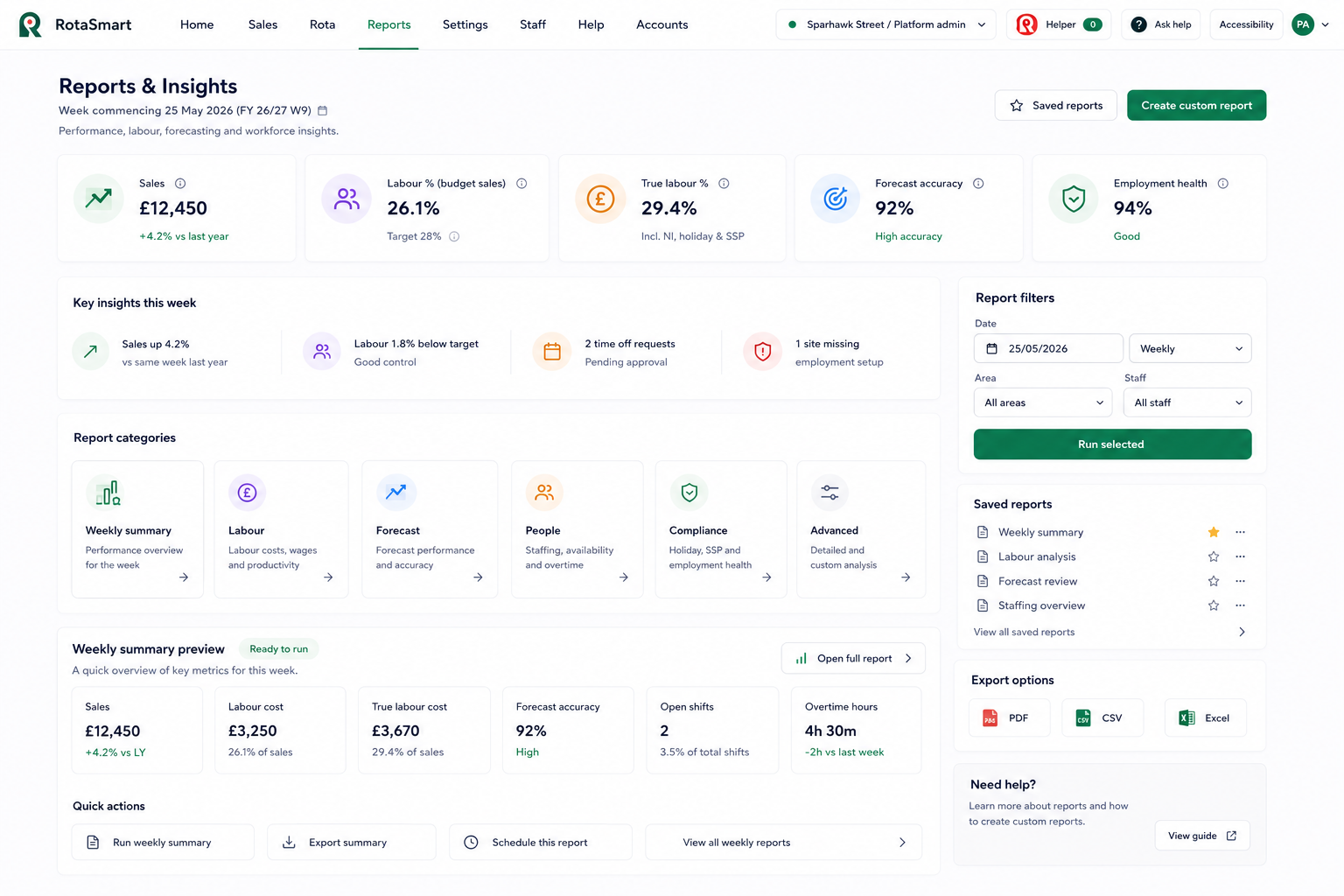
RotaSmart helps you match staff to expected trade by pulling sales forecasts directly into rota planning.
You can see wage percentage and labour cost while shifts are still editable, using labour cost control to stay within budget before publishing.
Integrated reporting helps show where labour cost generates returns and where inefficiencies persist.
Ready to protect margin before the rota goes live? Book a demo or use the labour cost calculator to size the opportunity.
Want to see this on your own week?
Walk through forecast, rota build, labour cost, wage percentage, and staff app flow with RotaSmart.