RotaSmart RotaSmart
Hospitality sales forecasting

Forecast the week before you build the rota.

RotaSmart helps operators turn expected trade into staffing demand before shifts are placed. Forecast sales, wet and food mix, opening times, actuals, and known events all feed the weekly planning view.

See labour control
Forecast before the rota is builtWet and food sales shape demandActuals show where confidence changes
Trade shape
Shown
Demand
Linked
Budget
Earlier
Forecast view before planning
Weekly forecast
A stronger rota starts with a better view of how the week is expected to trade.
Forecast sales
£13.2k
Weekly context before shifts are built.
Wet / food mix
62 / 38
Different sales need different cover.
Event uplift
Fri +18%
Known peaks can be planned before the week starts.
Confidence
91%
Actuals and patterns show where to review.
Expected sales and known trading context shape the rota before shifts are placed.
Separate food and wet sales where they need different staffing patterns.
Review actuals and variance so managers know where the forecast needs attention.

Where forecasting changes the rota

Start
Quiet trade
Keep early-week cover lean without guessing where the floor still needs support.
Food
Service shape
Food sales can pull kitchen, floor, prep, and clean-down demand into different parts of the day.
Event
Known uplift
Event nights and local peaks can increase cover before managers discover the gap too late.
Close
Late finish
Forecast shape helps avoid carrying heavy labour all day just to cover the final pressure point.

Sales forecast and labour forecast are different decisions

Sales forecast
Trade

Expected wet, food, events, daypart shape, and actuals.

Labour forecast
Cover

The staffing demand created by that trade shape.

Rota
People

Named shifts, availability, time off, and open gaps.

Actuals
Review

Variance feeds the next planning conversation.

Forecast-first workflow

01

Set expected trade

Use sales, daypart shape, events, and known context.

02

Translate into demand

Turn the forecast into staffing pressure by role or area.

03

Build the rota

Place shifts where demand and people constraints overlap.

04

Compare actuals

Use variance to improve the next forecast and rota.
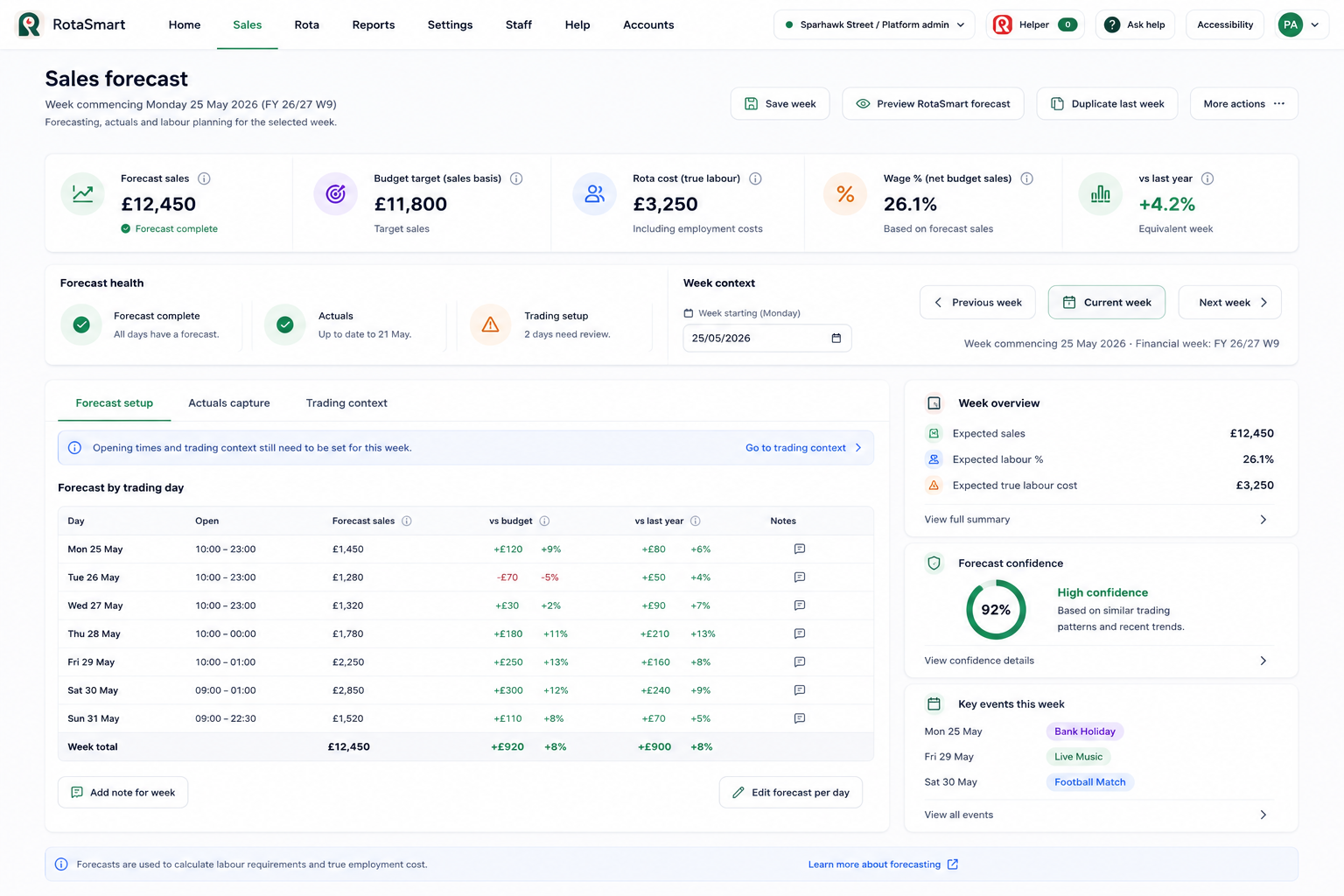
Forecast and demand views before the rota

RotaSmart sales forecasting screen showing wet and food daypart forecast with actuals comparison
Sales forecasting

Forecast and actuals sit before the rota decision

Weekly sales, actuals, variance, and readiness sit together before staffing decisions are made.

Why forecast belongs before the rota

What happens without a clear forecast

Managers build from habit, then adjust once the week starts to feel wrong. By then wage percentage and service cover are already harder to correct.

  • Last week's rota becomes the starting point
  • Known events are remembered too late
  • Wet and food sales are treated too similarly
  • Actual variance is reviewed after the rota is already live

What better forecasting gives operators

The forecast becomes the commercial brief for the rota: where trade is expected, where cover needs to rise, and where labour should stay lean.

  • A better weekly sales view before shifts are fixed
  • Demand shaped by trade pattern, not guesswork
  • Wage percentage checked against the forecast
  • Better questions before the rota becomes fixed

Forecasting tools built for weekly planning

Weekly sales forecast
Set the expected trade level before rota decisions are made.
Wet and food sales
Separate demand patterns where the venue needs different staffing responses.
Opening times and context
Trading hours, known events, and outdoor trading factors shape the week.
Actuals and variance
Compare actual sales back to forecast so the next plan starts from better information.
Demand conversion
Turn forecast shape into staffing demand before shifts are generated.
Labour target
Connect forecast sales to wage percentage and budget variance while the rota can still change.

Forecasting is useful only when it changes the rota

A sales number on its own is not enough. The value comes when forecast shape affects cover, wage percentage, and the expensive parts of the week before the rota is shared.

  • Forecast reviewed before shifts are fixed
  • Demand cover shown alongside budget
  • Managers can tighten the heavy points early
  • Forecast confidence highlights where to check

Keep forecasting close to the real week

RotaSmart keeps forecasting close to the way hospitality managers plan: trading pattern, food service, events, weather or outdoor uplift, and actual sales variance.

  • No abstract platform language
  • Clear weekly trading context
  • Forecast, rota, and labour cost linked
  • Useful for one site or a small group

Useful across pubs, bars, food-led venues, and small groups

Pubs
Plan around quiet starts, weekend peaks, sport, quizzes, and late closes.
Bars
Event nights and late trading patterns shape cover before it is fixed.
Food-led venues
Separate food-led demand from wet-led demand where staffing needs differ.
Small groups
Keep forecast, wage percentage, and rota decisions consistent across sites.

How forecast becomes a stronger rota

01

Set the week

Add expected sales, opening times, and known trading context.

02

Check the shape

Review wet and food split, events, and actual variance.

03

Create demand

Turn the forecast into staffing demand by area and period.

04

Build the rota

Build with cost, cover, and wage percentage in view.

05

Learn from actuals

Compare actual sales back to forecast to improve the next week.

What operators usually want to settle before they book

Will this be another forecasting spreadsheet?

No. The forecast sits with rota and labour decisions so managers can use it while the rota can still change, not after the week is already moving.

What if my week changes late?

Known events, actuals, and trading context can be reviewed as the week changes, so managers can see what needs attention.

Does this replace manager judgement?

No. It gives managers better context for the decisions they already make around trade, cover, and labour cost.

Questions about hospitality forecasting

Does forecasting automatically build the rota?

No. The forecast shapes demand and labour context, then managers can build and adjust the rota with cover and cost in view.

Can it separate wet and food sales?

Yes. Wet and food sales can be treated differently where they create different staffing patterns.

How does actual sales data help?

Actuals help show where the forecast was strong or weak, so managers know what to check before the next rota is built.

Is this just for food-led venues?

No. The positioning is broader: pubs, bars, food-led venues, and small hospitality groups where the rota has to follow trade.

Keep planning from here

See forecast, demand, and rota cost together

We will walk through a live weekly example showing how forecast sales, trading context, staffing demand, rota cost, and wage percentage connect before the rota is shared. Introductory pricing is currently available for early customers.

Forecast and actuals view
Demand generated from trade shape
Rota cost and wage percentage before sharing
Back to homepage