
RotaSmart blog
How to reduce hospitality labour cost without cutting peak cover
Practical ways for pubs, bars and cafes to reduce labour waste while protecting busy service periods, staff wellbeing and rota quality.

Operational insight
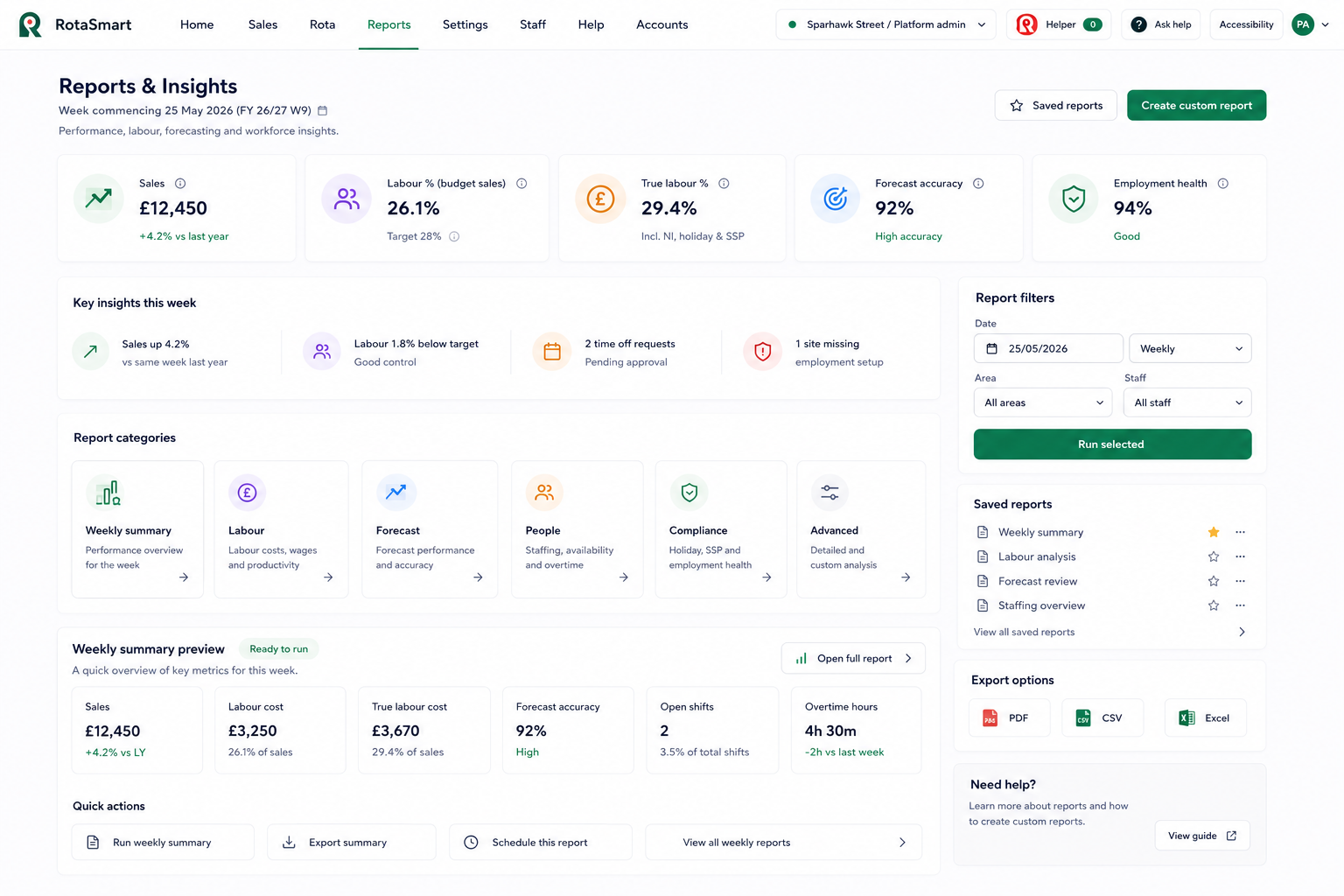
The useful moment is before publish, when managers can still move hours, protect peaks, and keep wage percentage under control.
Operator checklist
- Set expected sales for the week.
- Check planned labour cost before publishing.
- Review quiet-period cover separately from peak cover.
- Record the reason for any planned overspend.
Quick answer
Labour cost should be reduced by removing waste from the wrong hours, not by cutting the cover needed for peak trade.
Key takeaways
- Labour cost is easiest to control before the rota is published.
- Peak cover should be protected before quiet-period hours are reduced.
- Overstaffing, early clock-ins, late clock-outs and untracked breaks can all create hidden waste.
- Multi-skilled staff make the rota more flexible.
- RotaSmart keeps forecast sales, planned labour and wage percentage visible during rota build.
Reducing labour cost should not mean weakening service. If a pub, bar or cafe cuts the wrong shifts, queues grow, staff burn out and sales can suffer.
The better approach is to remove waste from quiet periods, tighten clocking and breaks, and protect the sessions that make the week profitable.
1. Know your labour baseline
Start by understanding what you are spending now.
Review:
Forecast sales; Planned rota cost; Actual hours worked; Wage percentage; Open shifts; Breaks and clocking exceptions.
Without a baseline, labour cost control becomes guesswork. RotaSmart's labour cost control page explains how forecast sales, rota cost and budget variance fit together.
2. Find where labour waste lives
Labour waste is not always obvious. It often hides in the small gaps between the plan and the real week.
Common examples include:
Too much cover during quiet periods; Staff clocking in before they are ready to work; Staff staying late without a clear reason; Breaks not being tracked consistently; Prep or cleaning scheduled during expensive trading hours; Copying old rotas that no longer match demand.
The aim is not to cut everyone. The aim is to move labour to the parts of the week where it protects service and sales.
3. Protect the peak first
Before reducing any hours, identify the sessions that need strong cover.
For pubs and bars, that may be Friday evening, Saturday evening, event nights and bank holiday lead-ins. For cafes, it may be breakfast, lunch and close-down.
Do not remove cover from these sessions just to hit a weekly percentage. Instead, look at quieter hours, start times, finish times and role mix.
RotaSmart's sales forecasting helps managers understand the shape of demand before the rota is built.
4. Flex schedules around real demand
A rota is more efficient when shifts follow the trading curve.
Useful changes include:
- Shorter shifts in quiet periods.
- Staggered starts before peak trade.
- Separate close-down shifts where needed.
- Prep work moved away from busy service.
- On-call or offered shifts where your policy allows them.
The rota builder lets managers adjust the week while labour cost and wage percentage remain visible.
5. Use multi-skilled staff carefully
Cross-training can reduce idle time and make the rota more resilient.
A bar team member who can help with floor cover, or a cafe team member who can switch between coffee and prep, gives managers more flexibility.
But multi-skilling should not be used to hide impossible workloads. If a shift needs kitchen cover, manager cover or experienced close-down cover, the rota should show that clearly.
Use staff availability and roles to make sure people are placed where they can work effectively.
6. Tighten clocking, breaks and sign-off
Labour control does not end when the rota is published.
Clocking and sign-off help managers compare planned hours with actual hours. That matters when staff clock in early, forget to clock out, miss breaks or stay late.
RotaSmart's clocking in and shift sign-off workflows help managers review exceptions before labour costs become final.
7. Review weekly and act quickly
The best labour control routines are weekly, not occasional.
Each week, check:
Did actual sales match forecast?; Did actual labour match planned labour?; Which days were over target?; Which shifts created unexpected cost?; Did open shifts or availability gaps create pressure?.
Then adjust the next rota. Small weekly corrections are easier than a major cost-cutting exercise later.
Want to see this on your own week?
Walk through forecast, rota build, labour cost, wage percentage, and staff app flow with RotaSmart.