 RotaSmart Team
Forecast
Wet and food sales
Expected trade, sales mix, sport, quizzes, and events shape the rota before shifts are shared.

Shape weekends, event nights, food service, and late closes faster, keep wage percentage in view, and spend less time chasing the same cover problems twice.
Pub rota software helps managers plan bar, floor, kitchen, event and close-down cover around expected trade.
Expected trade, sales mix, sport, quizzes, and events shape the rota before shifts are shared.
Planned cover stays connected across service, late closes, prep, and reset work.
Planned labour cost is reviewed against forecast sales while the rota can still change.
Pub weeks often change because one night, one event, or one bank holiday shifts the labour shape.
Protect Friday and Saturday peaks without carrying the same cover into quiet starts.
Add event uplift before the rota becomes fixed.
Separate wet-led and food-led pressure so kitchen and floor cover do not drift apart.
Each venue type has its own trading pattern, pressure points, and staffing risks.
Keep quieter starts lean while staying ready for local uplift.
Protect the overlap between food service, drinks, and close-down.
Plan peak cover and late finishes before the rota is shared.
Shift the pattern again for food-led service and reset work.
The same rota can be wrong when events, weather, local trade, or food mix changes.
Cost needs to be visible while shifts can still be moved, shortened, or opened.
Availability, time off, offers, and swaps need a controlled route back to the rota.
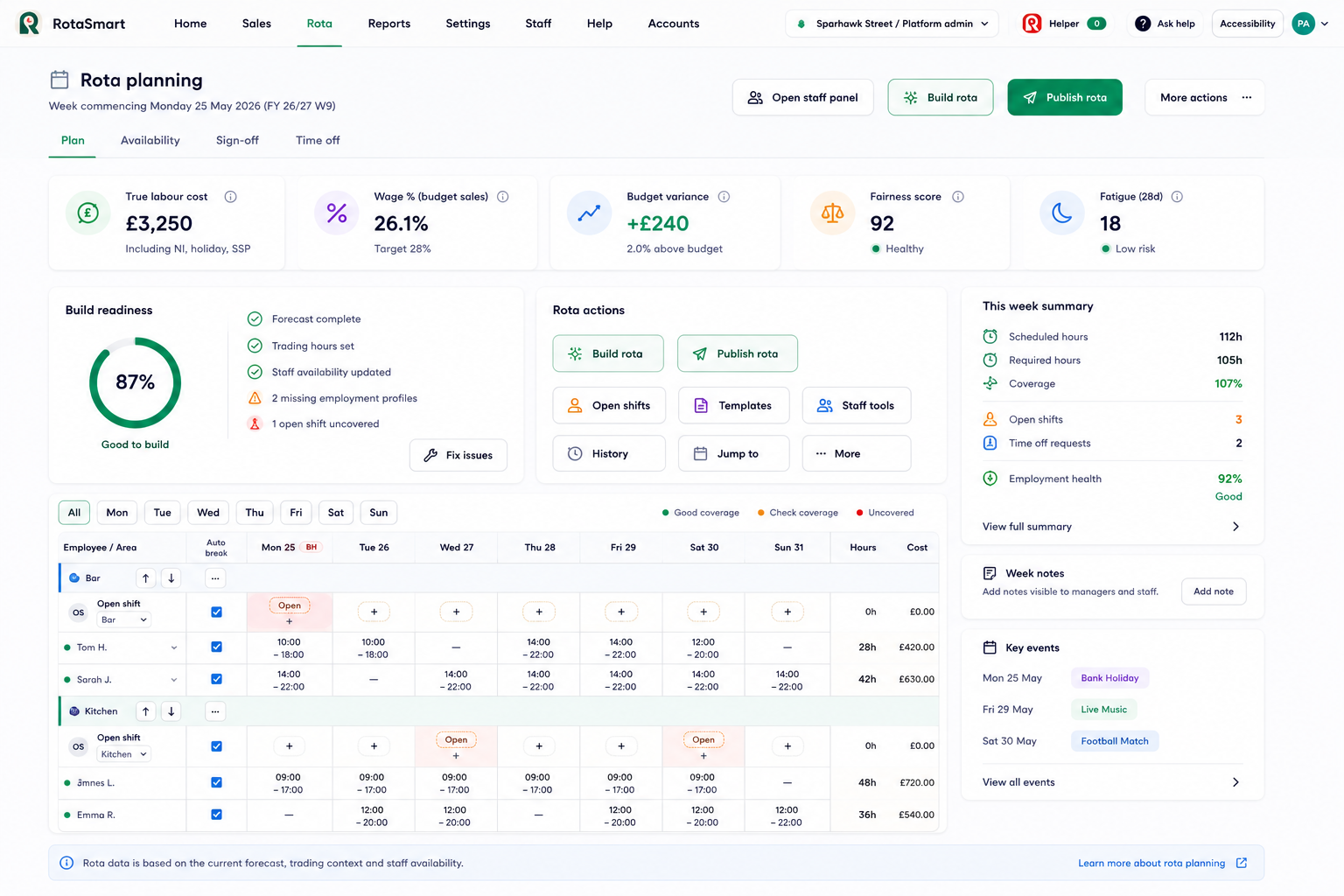
Weekend pressure, open shifts, wage percentage, and key events are easier to manage when they sit beside the rota grid.
Schedules are rarely static. One week may be driven by sport, live music, weather, local events, bank holidays, or late trading.
Add forecast, opening times, and event-driven trade.
Get a workable rota on screen quickly.
Adjust cover with cost and wage percentage still in view.
Review availability, fairness, fatigue, and open gaps.
RotaSmart Team handles shifts, time off, clock-in, offers, and swaps.
A pub rota is the weekly staff plan for bar, floor, kitchen, event, and close-down cover across the trading week.
Start with expected wet and food sales, known events, opening hours, and close-down work, then place shifts with wage percentage and availability in view.
It depends on the pub type, trading shape, service style, opening hours, and minimum cover.
Separate quiet starts from peak periods, add sport, quizzes, events, food service, and late closes, then check wage percentage before publishing.
RotaSmart keeps forecast trade, planned rota cost, wage percentage, availability, and staff changes together so managers can review the week while shifts can still change.
Bring a real week and review forecast, labour plan, rota cost, wage % and staff flow.