Forecast sales
£13,250
Expected weekly trade before publish.

This guide frames labour control around better planning: forecast trade, staff the right periods, check wage percentage early, and keep team constraints in view.
The useful number is the one managers can still act on before the week goes live.
Expected weekly trade before publish.
Rota cost before changes are locked in.
Labour cost divided by forecast sales.
Trim quiet periods without weakening peaks.
The rota drifts when trade shape is assumed instead of checked.
Managers need wage percentage during build, not only after sign-off.
Strong labour control moves hours to where they work hardest.
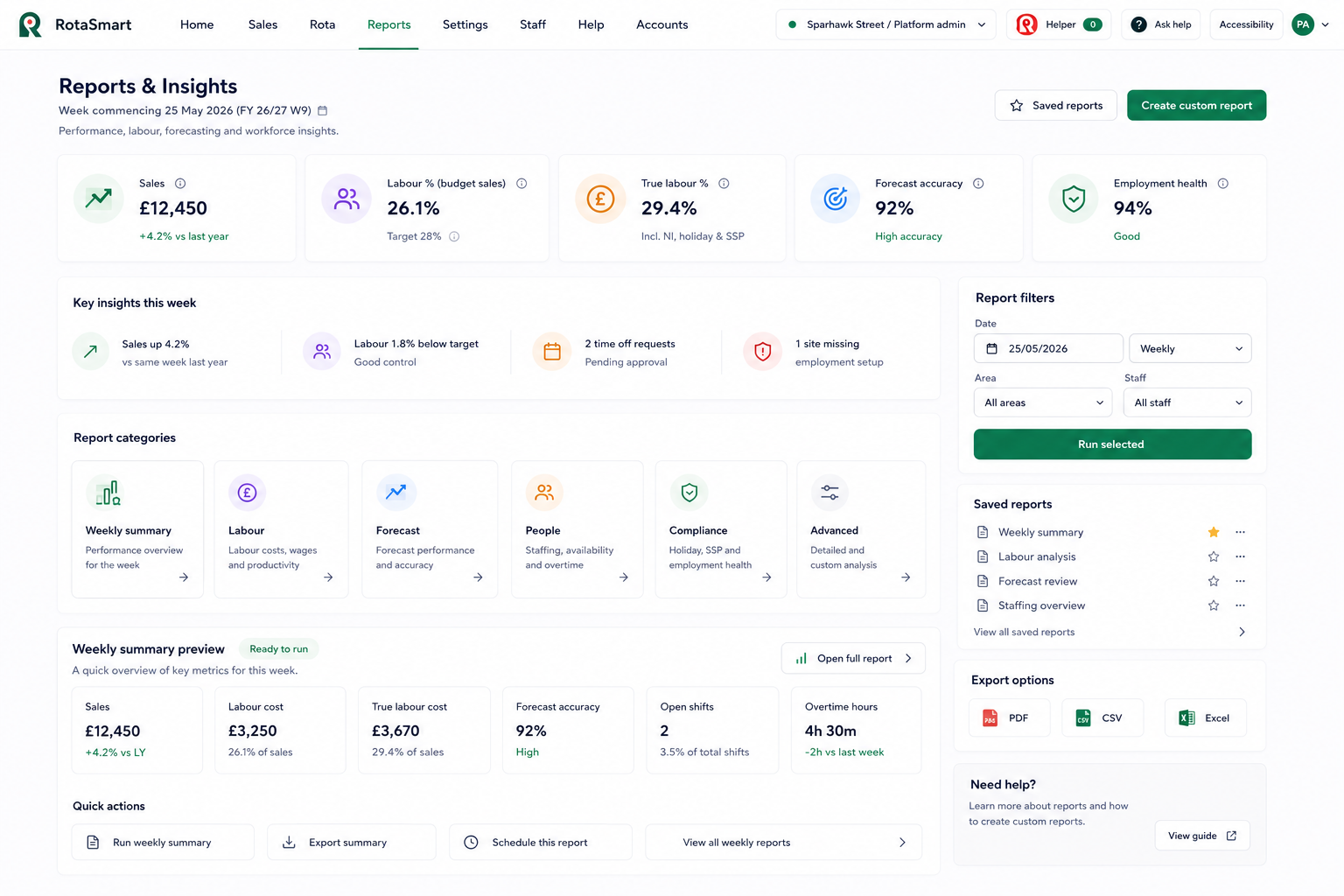
The reports view helps managers review labour percentage, true labour cost, forecast accuracy, and weekly issues before the next plan.
Hospitality rotas change quickly, and managers need a simple way to connect trade, cover, cost, and people decisions before the week goes live.
Know the commercial target before building shifts.
Find where labour is above demand.
Do not cut the periods that drive service.
Check wage percentage, gaps, and staff constraints together.
They can plan staffing around forecast demand and check wage percentage before the rota is published.
No. Strong labour control moves hours to where they work hardest and removes waste where demand is light.
Yes. RotaSmart keeps forecast, rota cost, wage percentage, and cover in view while the rota can still be changed.
Bring a real week and review forecast, labour plan, rota cost, wage % and staff flow.
 RotaSmart Team