
RotaSmart blog
Navigating UK hospitality regulations and wage changes in 2026
How UK hospitality operators can prepare for rising wage pressure, tighter regulation and labour cost control in 2026.

Operational insight
The useful moment is before publish, when managers can still move hours, protect peaks, and keep wage percentage under control.
Operator checklist
- Set expected sales for the week.
- Check planned labour cost before publishing.
- Review quiet-period cover separately from peak cover.
- Record the reason for any planned overspend.
Quick answer
Rising wages and tighter regulation make rota planning more commercial. Operators need live labour cost, wage percentage, hours and break visibility before shifts are published.
Key takeaways
- Understanding the regulatory landscape
- Why wage changes affect the rota
- How RotaSmart helps managers stay in control
- Forecast before you schedule
- Keep cost visible from the start
UK pubs, bars and cafes are facing renewed pressure from rising wage costs, tighter employment expectations and ongoing compliance demands. In that environment, a spreadsheet rota is increasingly difficult to trust.
Operators need a clearer way to see labour budget, wage percentage, staffing demand, staff availability and signed-off hours before small problems become expensive.
Understanding the regulatory landscape
Hospitality employers need to stay close to wage rates, holiday rules, tips, working-time obligations, break expectations and record keeping. These requirements are designed to protect staff, but they can also increase pressure on already tight margins.
Compliance is not just about paying the correct hourly rate. It also means understanding total hours, overtime risk, rest patterns, approved time off and whether the rota is realistic for the team you have available.
Manual systems make these checks harder because the information sits in separate places. A manager may build shifts in one spreadsheet, track availability in messages and review payroll after the week has already happened.
Why wage changes affect the rota
When wage costs rise faster than sales, wage percentage becomes one of the most important numbers in the business. Even a small amount of unnecessary cover can push labour cost beyond target.
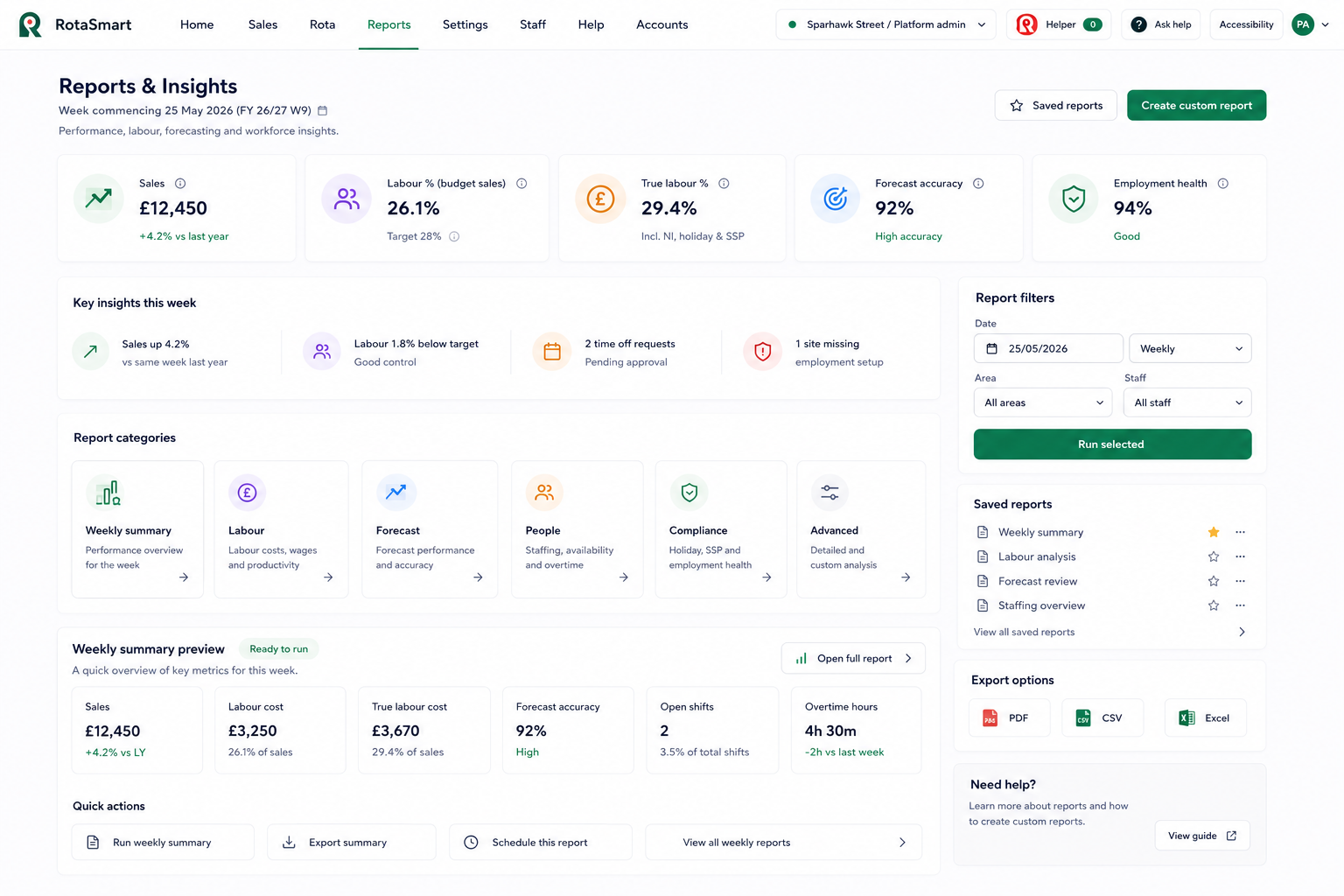
That is why operators need to see cost while the rota is still editable. RotaSmart's labour cost control view helps managers connect forecast sales, labour budget, rota cost and wage percentage before shifts are published.
How RotaSmart helps managers stay in control
RotaSmart connects forecasting, rota building and labour control in one weekly workflow.
Forecast before you schedule
The sales forecasting view helps managers plan around expected trade, opening hours, events and known uplifts before placing shifts. This gives the rota a demand-led starting point instead of relying on last year's pattern or gut feel.
Keep cost visible from the start
The rota builder keeps wage percentage, labour budget and rota cost close to the shifts being created. Managers can see whether the rota is drifting before it goes live.
Track availability and time off
Staff availability, time-off requests and open shifts are easier to manage when they sit near the rota. This reduces the risk of scheduling someone incorrectly or missing a request that affects cover.
Review signed-off hours
The shift sign-off and payroll reports workflow helps managers compare planned shifts with what actually happened, amend where needed and prepare cleaner payroll data.
Want to see this on your own week?
Walk through forecast, rota build, labour cost, wage percentage, and staff app flow with RotaSmart.