
RotaSmart blog
Guest spend and data-led profit: beyond turnover
Why pubs, bars and cafes should plan around guest value, event spend and labour return, not only covers or turnover.
Operational insight
The useful moment is before publish, when managers can still move hours, protect peaks, and keep wage percentage under control.
Operator checklist
- Set expected sales for the week.
- Check planned labour cost before publishing.
- Review quiet-period cover separately from peak cover.
- Record the reason for any planned overspend.
Quick answer
Covers and turnover do not tell the whole story. High-spend events may deserve extra staff, while low-return periods need tighter labour discipline.
It is not only about how many pints you pour. The more useful question is how much each guest spends across drinks, food, events and extras.
A data-led focus on total guest spend helps pubs and cafes maximise profit.
Why it matters
Traditional metrics like covers or turnover measure volume but can ignore ancillary spend.
Revenue per available guest considers everything a guest buys, including drinks, food, merchandise and tickets. Focusing on guest value encourages venues to create packages and upsell experiences that increase spend per head.
Industry insight
Guest-value metrics require integrated data and personalised offers.
Understanding what different customer segments spend on allows managers to tailor specials and events. This view aligns with wider trends toward personalisation and premiumisation.
How RotaSmart helps
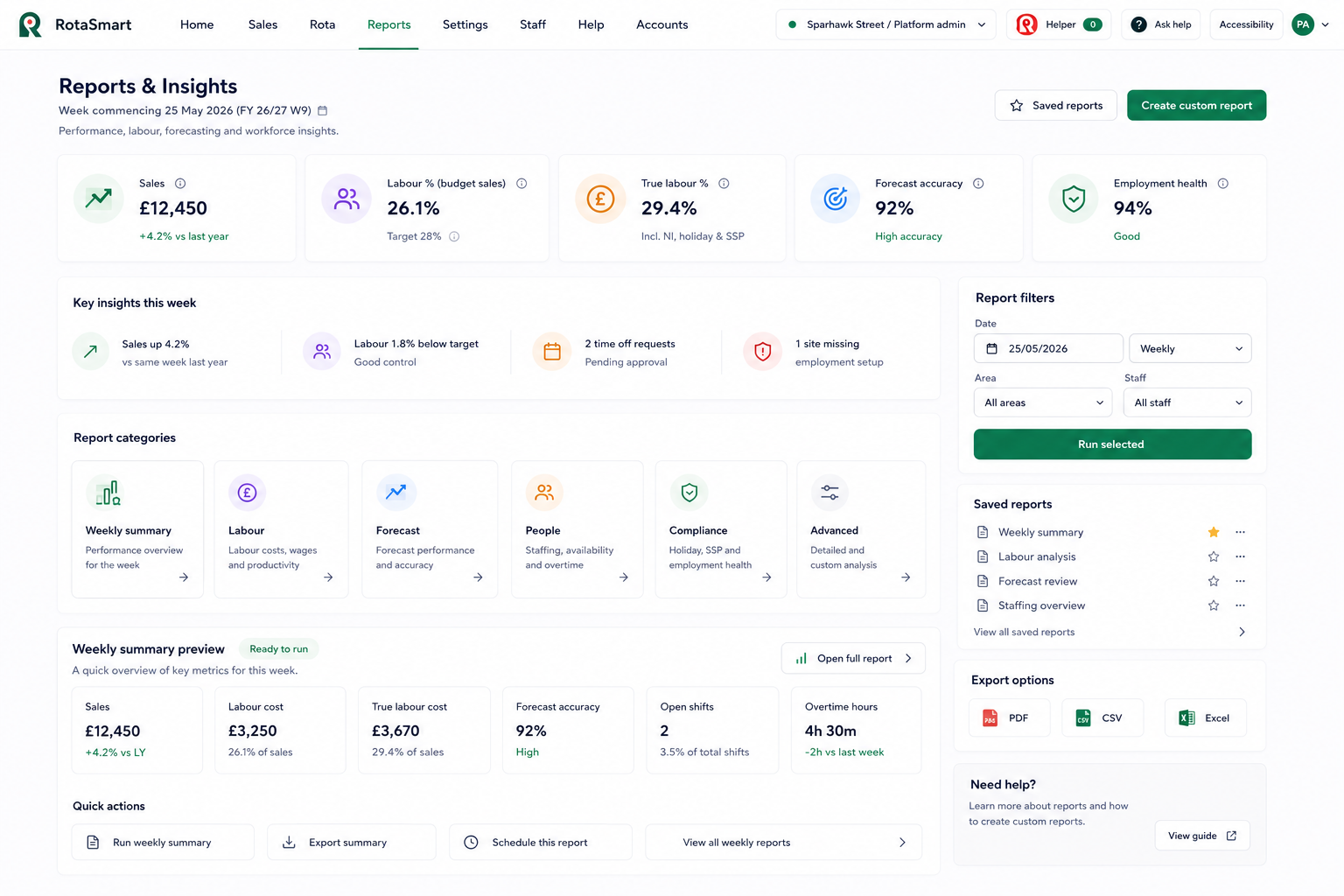
RotaSmart helps analyse labour costs alongside expected trade and guest spend.
When planning rotas, consider not just expected footfall but also high-spend nights such as quiz nights, tastings or special events. Schedule enough staff to capture upsell opportunities and ensure smooth service when guests are most engaged.
Want to plan around profit, not just turnover? Book a demo or review the labour cost calculator.
Want to see this on your own week?
Walk through forecast, rota build, labour cost, wage percentage, and staff app flow with RotaSmart.