
RotaSmart blog
What #VATsTheProblem means for hospitality labour planning
How Tom Kerridge's #VATsTheProblem campaign connects to pricing, margin, wage percentage and rota planning for UK pubs, bars and cafes.

Operational insight
The useful moment is before publish, when managers can still move hours, protect peaks, and keep wage percentage under control.
Operator checklist
- Set expected sales for the week.
- Check planned labour cost before publishing.
- Review quiet-period cover separately from peak cover.
- Record the reason for any planned overspend.
Quick answer
#VATsTheProblem is a campaign calling for hospitality VAT to be cut to 10%. Operators cannot plan on policy changing, but the campaign highlights why pricing, wage percentage, staffing and sales forecasts need to be reviewed together.
Key takeaways
- #VATsTheProblem is calling for hospitality VAT to be cut to 10%.
- A VAT cut is not confirmed, so rota and pricing plans should not assume it will happen.
- VAT pressure matters because it affects price headroom, margin and confidence to staff peaks properly.
- Wage percentage should be reviewed against forecast sales before the rota is published.
- If any VAT relief does arrive, operators still need to decide whether the benefit supports prices, wages, investment, staffing or margin recovery.
Tom Kerridge is spearheading #VATsTheProblem, a hospitality campaign calling for the UK Government to reduce hospitality VAT to 10%. The campaign is backed by sector bodies including UKHospitality, the British Beer and Pub Association, the British Institute of Innkeeping and CODE Hospitality.
The policy outcome is not guaranteed. Operators should not build plans that depend on a VAT cut arriving. But the campaign does highlight a real operating issue for pubs, bars and cafes: when tax, wages, rates, energy and food costs all rise together, the rota becomes one of the few places where managers can still protect margin before the week goes live.
This article is operational guidance, not tax advice. Speak to your accountant before changing VAT treatment, pricing or till setup.
Why VAT pressure shows up in the rota
VAT is not a rota cost in the same way as hourly pay, employer costs or holiday pay. But it changes the commercial room around the rota.
If a venue has less margin after tax and other operating costs, managers tend to become cautious. They may trim quiet periods, delay hiring, reduce training time or run tight peak cover. That can protect cost in the short term, but it can also weaken service, staff morale and sales capacity.
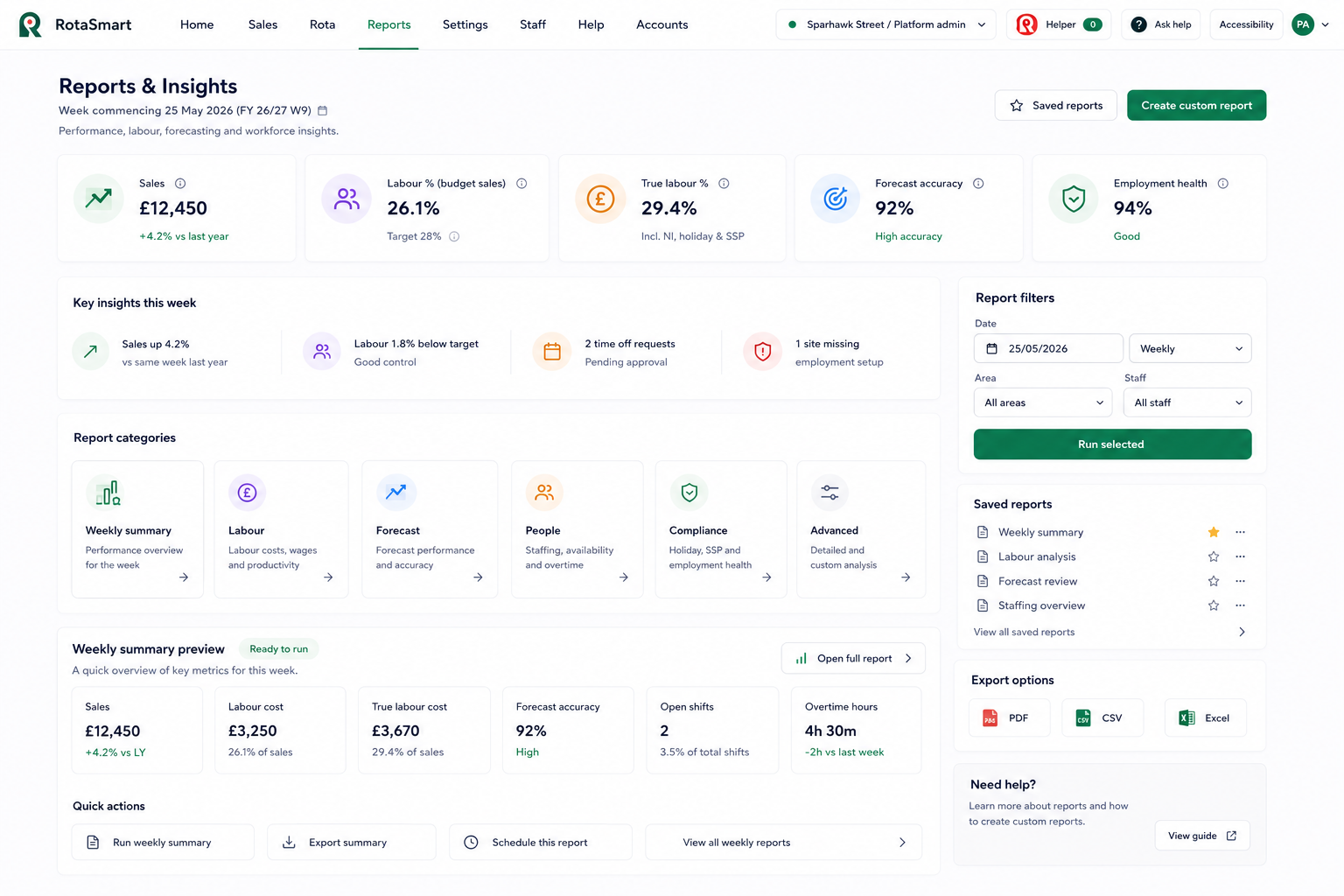
RotaSmart cannot change VAT. It can help managers keep the controllable part visible: forecast sales, planned labour, wage percentage and cover pressure in the same planning routine.
Start with the week, not the campaign
The first practical step is to build each week around the trade you expect, not around national debate.
Before publishing the rota, check:
Forecast sales by day and daypart; Wet and food sales mix; Known events, weather and bank holidays; Minimum manager and skilled-role cover; Staff availability and time off; Target wage percentage.
The hospitality sales forecasting view helps managers shape the trading week before shifts are placed. The rota builder then lets managers check whether planned labour still fits the commercial target.
Use wage percentage as the operating signal
When costs are rising, wage percentage is one of the clearest signals for rota control.
The basic relationship is:
- Planned labour cost divided by forecast sales.
If forecast sales are weak, the same number of staff hours can push wage percentage above target. If sales are strong, the rota may be able to carry more cover without damaging the week. That is why a copied rota can be risky: the same staffing pattern can be sensible one week and expensive the next.
RotaSmart's labour cost control pages are designed around this problem. They help managers see the wage percentage before the rota is fixed, not after the week has already been worked.
For more background, read what wage percentage should a small pub target?.
If VAT falls, decide where the benefit goes
If hospitality VAT were reduced in future, the operational question would not be as simple as "drop prices" or "add staff".
Different venues may use the benefit differently:
Hold prices steady where customers are price-sensitive; Protect menu quality or supplier choices; Improve pay, training or retention; Add cover to busy periods that have been running too tight; Rebuild margin after a period of cost pressure; Invest in repairs, equipment or service improvements.
The right answer depends on the venue's trading style, customer base, cost base and staffing model. A wet-led pub, food-led venue, cafe and event-heavy bar will not all use the same plan.
Do not cut peak cover first
Cost pressure often pushes managers toward blunt labour cuts. That is usually the wrong place to start.
Peak cover is where service quality, speed and guest spend are most exposed. Cutting Friday evening, Saturday food service or a strong Sunday lunch may reduce scheduled hours, but it can also damage revenue.
A better approach is to:
Protect the profitable peaks; Review quiet periods first; Move prep, cleaning and training into low-demand windows; Use shorter, shaped shifts instead of full-period cover; Keep manager and skilled-role cover visible.
This connects directly with how to reduce hospitality labour cost without cutting peak cover.
Watch VAT-specific campaigns and temporary relief separately
#VATsTheProblem is a campaign for a broader 10% hospitality VAT rate. Separately, HMRC has published guidance on a temporary 5% VAT rate for certain children's meals and family attractions from 25 June 2026 to 1 September 2026, subject to the relevant law coming into force.
Do not mix the two issues in planning:
The campaign is a policy ask; The children's meals guidance is a specific temporary measure with detailed rules; Neither should be handled by guesswork in the rota or till.
If you operate family food service, read what the temporary 5% VAT rate for children's meals means for rota planning and check HMRC guidance before changing menus or tills.
What managers can do now
While the sector watches the campaign, operators can still improve control this week:
Set a realistic wage percentage target; Forecast sales before building the rota; Separate wet, food and event-led demand where possible; Review quiet periods before trimming peak cover; Check staff availability before publishing; Compare scheduled labour with forecast sales; Review actuals after the week and adjust the next forecast.
That routine matters regardless of the tax outcome. If policy changes later, a cleaner forecast and rota process will make it easier to decide how to use any extra margin.
Want to see this on your own week?
Walk through forecast, rota build, labour cost, wage percentage, and staff app flow with RotaSmart.