RotaSmart
Commercial labour forecasting

Labour forecasting software

RotaSmart helps operators turn expected sales, wet and food mix, events, trading patterns, and actuals into staffing demand, planned rota cost, and wage percentage before.

Labour forecasting software
Weekly view
See forecast, demand, rota cost, wage percentage, and staff changes in the same weekly view.
Planning view
Weekly
Built around the week managers already work through.
Cover
In view
Demand and gaps stay close to the rota.
Wage %
Checked early
Cost pressure is shown while changes are still possible.
Staff changes
Tracked
Requests and swaps stay with the weekly rota.
Built by a hospitality operatorForecast, rota, and wage percentage in one weekly viewBuilt for pubs, bars, cafes, food-led venues, and small groupsStaff requests and shift changes stay controlled

What is hospitality labour forecasting?

Hospitality labour forecasting means using expected sales, trading patterns and known events to estimate the labour needed before the rota is built.

Sales forecast
Start with expected trade

Forecast sales, wet and food split, events, and daypart shape set the staffing brief.

Labour forecast
Translate trade into cover

The forecast becomes planned labour by role, area, period, and rota cost.

Review loop
Use actuals next week

Actual sales and signed-off labour show where the next rota should change.

What operators usually check

A useful forecast gives managers practical decisions before shifts are fixed, not a standalone report after the week has already happened.

Sales forecast versus labour forecast

Sales describe expected trade; labour forecasting turns that trade into cover.

  • Wet sales
  • Food sales
  • Events and dayparts
Wage percentage before publish

Planned rota cost should be checked against forecast sales while shifts can still move.

  • Planned rota cost
  • Wage percentage
  • Review before publish
Actuals improving the next rota

Signed-off labour and actual trade help the next forecast become more useful.

  • Forecast variance
  • Signed-off hours
  • Next-week review

Sales forecast and labour forecast are different decisions

Sales forecast
Trade

Expected wet, food, events, daypart shape, and actuals.

Labour forecast
Cover

The staffing demand created by that trade shape.

Rota
People

Named shifts, availability, time off, and open gaps.

Actuals
Review

Variance feeds the next planning conversation.

Forecast-first workflow

01
Set expected trade

Use sales, daypart shape, events, and known context.

02
Translate into demand

Turn the forecast into staffing pressure by role or area.

03
Build the rota

Place shifts where demand and people constraints overlap.

04
Compare actuals

Use variance to improve the next forecast and rota.
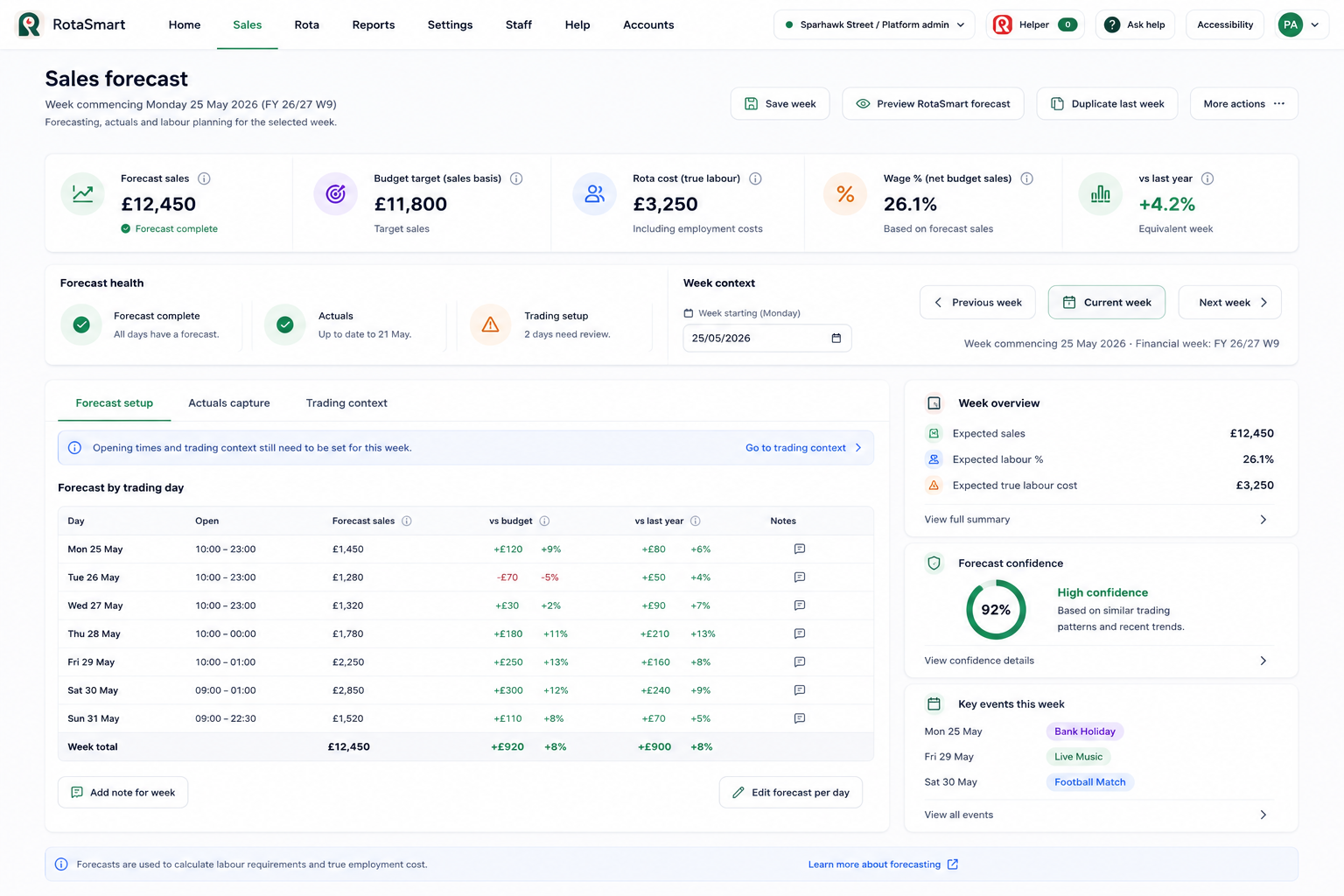
Forecast and demand views before the rota

RotaSmart sales and labour forecasting screen showing sales mix, events, and staffing demand
Translate expected trade into staffing demand

Use forecast sales, sales mix, events, and actuals to shape staffing demand before the rota is built.

Why labour forecasting belongs before the rota

Hospitality rotas change quickly, and managers need a simple way to connect trade, cover, cost, and people decisions before the week goes live.

Forecast inputs that change staffing decisions

Forecast sales
Use expected sales, wet and food split, and week shape before shifts are placed.
Event uplift
Add known demand changes so the rota is not surprised by the week.
Planned rota cost
See planned hours, cost, and wage percentage before publishing.
Actuals review
Use actual trade and signed-off labour to improve the next forecast.

Where the forecast improves the week

Pubs
Separate wet and food pressure, sport, quizzes, and bank holidays.
Bars
Plan late trading, event uplift, close-down, and repeated heavy finishes.
Restaurants
Match FOH and BOH cover to covers, prep, service, and close-down.
Cafes
Separate breakfast, lunch, prep, quiet periods, and close-down.

From forecast trade to staffing demand

01
Forecast sales

Set expected trade by day and period, including wet and food split where relevant.

02
Add context

Include events, bookings, weather, local activity, and known operating changes.

03
Plan labour

Turn the forecast into planned rota hours, cost, and wage percentage.

04
Review actuals

Use actual trade and signed-off labour to improve the next week's plan.

Questions about labour forecasting software

What is hospitality labour forecasting?

It means using expected sales, trading patterns, and known events to estimate the labour needed before the rota is built.

How do you forecast labour from sales?

Start with forecast sales and week shape, then translate demand into planned cover by role, area, and period before checking wage percentage.

How does rota data help control wage percentage?

Planned rota cost can be compared with forecast sales before publishing, then actual trade and signed-off labour can sharpen the next plan.

See forecast, demand, and rota cost together

Bring a real week and review forecast, labour plan, rota cost, wage % and staff flow.

Forecast and demand view
Rota builder and wage percentage
RotaSmart Team staff flow
Book a demo Start Free Trial