RotaSmart
Guide: labour cost management

Labour cost management for hospitality rota planning

Use this guide to move from wage percentage theory into weekly rota decisions: forecast trade, calculate labour cost, check efficiency, and review wage-change pressure before.

Labour cost management
Weekly view
See forecast, demand, rota cost, wage percentage, and staff changes in the same weekly view.
Planning view
Weekly
Built around the week managers already work through.
Cover
In view
Demand and gaps stay close to the rota.
Wage %
Checked early
Cost pressure is shown while changes are still possible.
Staff changes
Tracked
Requests and swaps stay with the weekly rota.
Built by a hospitality operatorForecast, rota, and wage percentage in one weekly viewBuilt for pubs, bars, cafes, food-led venues, and small groupsStaff requests and shift changes stay controlled

A simple wage percentage example

The useful number is the one managers can still act on before the week goes live.

Forecast sales
£13,250

Expected weekly trade before publish.

Planned labour
£3,265

Rota cost before changes are locked in.

Wage percentage
24.6%

Labour cost divided by forecast sales.

Action
Move hours

Trim quiet periods without weakening peaks.

Overspend usually starts before payroll

Habit
Last week copied forward

The rota drifts when trade shape is assumed instead of checked.

Timing
Cost reviewed too late

Managers need wage percentage during build, not only after sign-off.

Cover
Peaks and quiet periods blurred

Strong labour control moves hours to where they work hardest.
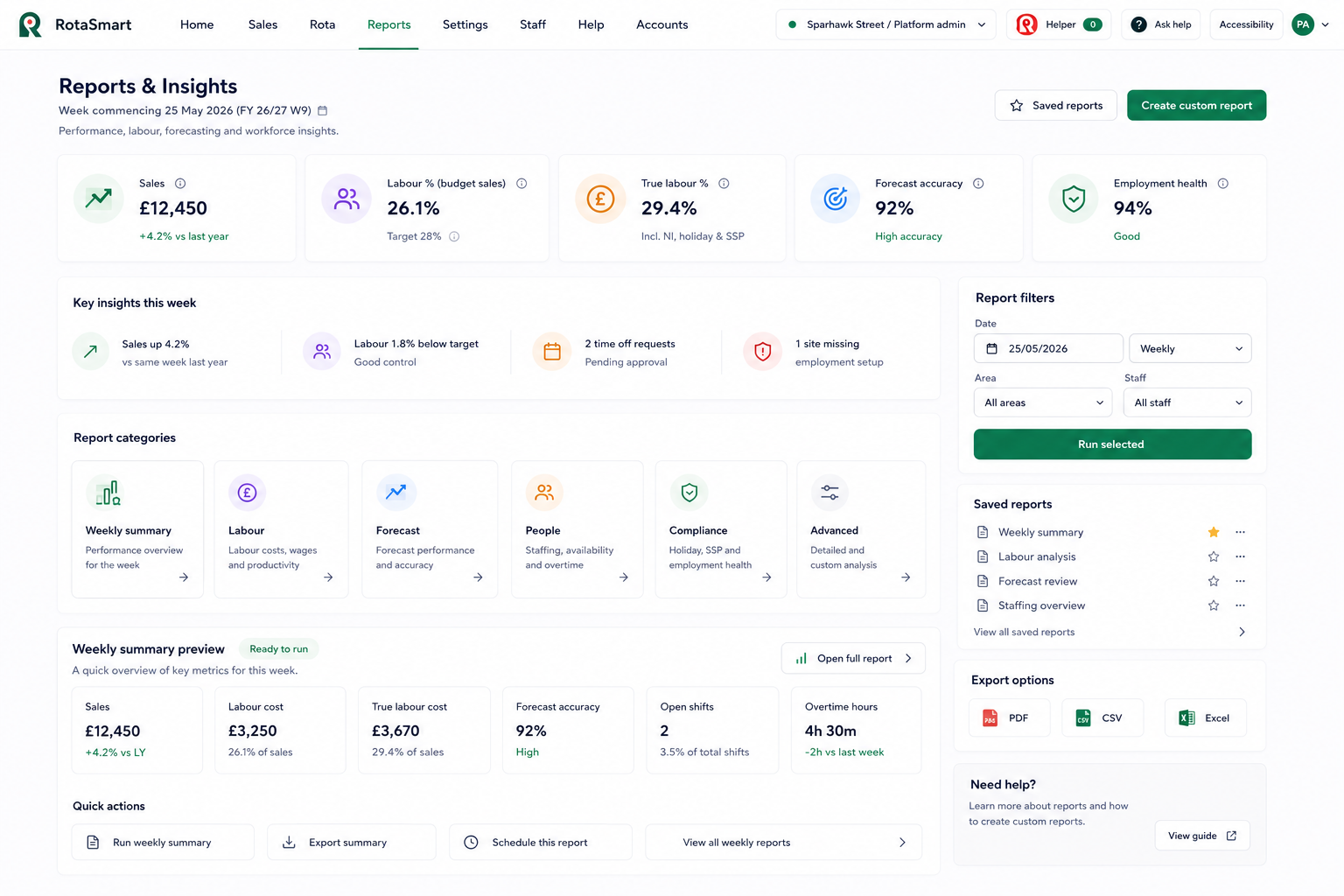
Labour cost and wage percentage in context

RotaSmart reports screen showing sales, labour percentage, true labour cost, forecast accuracy, and weekly summary
Calculate wage percentage, then act while the rota can still change

Sales, labour percentage, true labour cost, forecast accuracy, and weekly summary give managers a clear cost signal before review.

Where labour cost starts to drift

Hospitality rotas change quickly, and managers need a simple way to connect trade, cover, cost, and people decisions before the week goes live.

Controls that make wage percentage actionable

Labour cost calculator
Estimate planned labour cost against forecast sales before the rota goes live.
Wage percentage planning
Use wage percentage as an early planning signal, not only an after-the-week report.
Staffing efficiency
Find heavy quiet periods without weakening peak cover.
Legislation context
Keep wage-change and hospitality compliance pressure connected to weekly labour planning.

Where margin risk usually appears

Pubs
Plan around weekends, events, food service, late closes, and quiet starts.
Bars
Keep late trading, peak cover, staff changes, and wage pressure in one view.
Cafes
Shape cover around breakfast, lunch, prep, close-down, and lighter trading periods.
Small groups
Keep rota planning consistent across sites without adding a heavy process.

How to act before overspend is locked in

01
Set the forecast

Start with the sales shape and known trading context.

02
Calculate planned labour

Estimate rota cost and wage percentage before publish.

03
Tighten inefficient periods

Move or reduce labour where demand does not justify it.

04
Review wage and rule changes

Check whether wage rates, breaks, or policy changes alter the target.

Questions about labour cost management

What is labour cost management in hospitality?

It is the weekly routine of matching staffing cost to expected trade while protecting service, compliance, and team sustainability.

How should wage percentage be used?

Use it while the rota can still change, then review actual results after the week.

Can labour cost be reduced without cutting peak cover?

Yes. The stronger approach is to remove waste from low-demand periods while protecting the hours that carry service.

More on Labour Cost Management

Find the labour drift in a real week

Bring a real week and review forecast, labour plan, rota cost, wage % and staff flow.

Forecast and demand view
Rota builder and wage percentage
RotaSmart Team staff flow
Book a demo