
RotaSmart blog
Protect your people: tackling hospitality burnout through better rotas
How predictable scheduling, fair shift patterns and clearer communication can help reduce burnout in hospitality teams.

Operational insight
Staff changes are easier to manage when requests, offers, swaps, availability, and clocking stay connected to the week.
Operator checklist
- Check availability before filling difficult shifts.
- Keep time off and rota changes in an approved route.
- Review late finishes, fairness, and fatigue risk.
- Use signed-off actuals before payroll review.
Quick answer
Burnout is made worse by unpredictable schedules, repeated heavy shifts and unclear communication. Fair, forecast-led rotas help managers protect service without overloading the same people.
Key takeaways
- Recognise the signs
- Build schedules that support wellbeing
Hospitality is demanding work. Busy services, late finishes, last-minute changes and uneven shift patterns can quickly wear people down.
Better rotas do not solve every wellbeing issue, but they are one of the most practical places to start.
Recognise the signs
Burnout can show up as fatigue, disengagement, repeated sickness, conflict, mistakes or staff quietly leaving.
Managers should pay attention when the same people repeatedly work closes, weekends, split shifts or long runs without enough recovery time.
Build schedules that support wellbeing
Better scheduling habits include:
publishing rotas early enough for staff to plan around work;; reducing avoidable last-minute changes;; balancing weekends, closes and heavy shifts;; respecting availability and time-off requests;; encouraging proper breaks and recovery days;; giving staff one clear route for requests and shift changes.
Predictability is not just a convenience. It supports retention.
How RotaSmart helps
RotaSmart brings demand, labour cost and staff constraints into the same weekly plan. Managers can forecast the busy periods, build the rota around real need and spot where the same people are carrying too much pressure.
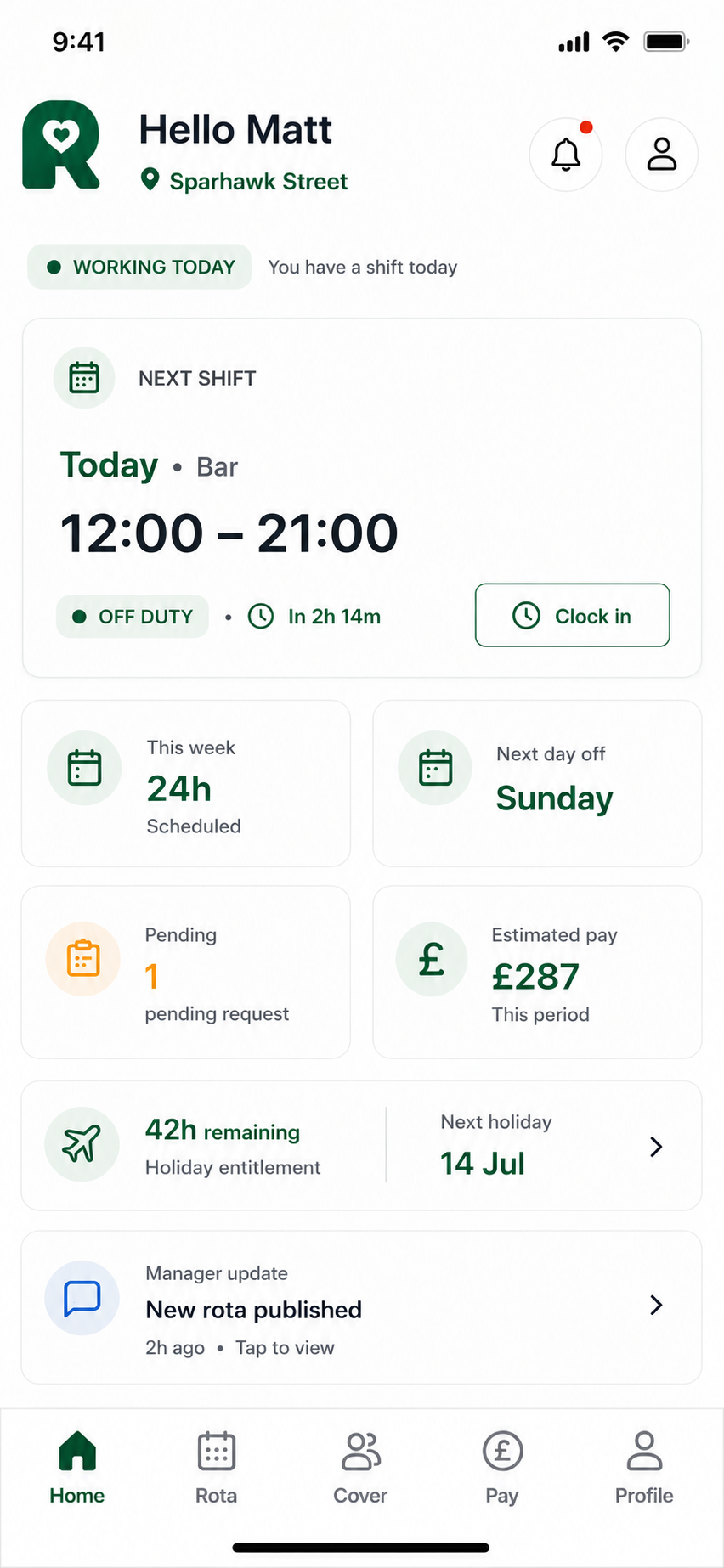
RotaSmart Team also gives staff a simpler way to view shifts, request time off, manage availability and communicate changes.
Ready to build rotas that work better for the team? Book a demo and see how RotaSmart supports fairer scheduling.
Want to see this on your own week?
Walk through forecast, rota build, labour cost, wage percentage, and staff app flow with RotaSmart.