
RotaSmart blog
How pubs and bars can rota around wet-weather sales dips
Practical rota and forecasting checks for pubs, bars and cafes when rain weakens footfall and drinks demand.

Operational insight
The useful moment is before publish, when managers can still move hours, protect peaks, and keep wage percentage under control.
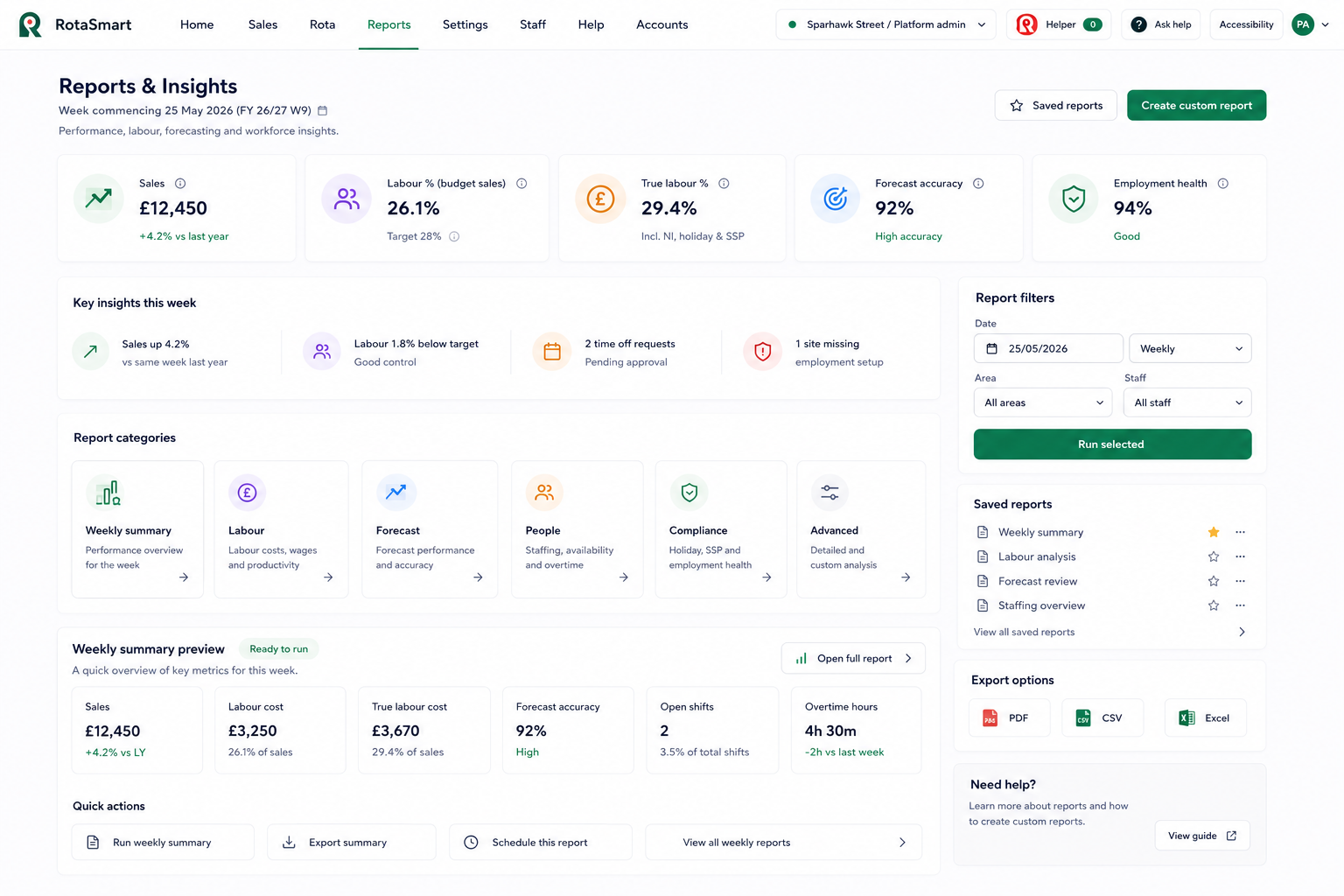
Operator checklist
- Set expected sales for the week.
- Check planned labour cost before publishing.
- Review quiet-period cover separately from peak cover.
- Record the reason for any planned overspend.
Quick answer
Wet weather can reduce walk-in drinks trade, but managers should not cut blindly. Forecast by daypart, protect known bookings and move labour into useful prep, cleaning or service tasks.
Key takeaways
- Weather does not affect every hour equally
- Use quiet periods productively
- Keep enough flexibility for sudden demand
- Watch wage percentage before the week goes live
- Review, do not guess
Rain can change hospitality demand quickly. A pub with a beer garden, a bar that relies on after-work footfall, or a cafe with outdoor seating can lose impulse trade when the weather turns.
Recent NIQ/CGA reporting highlighted weaker on-premise drinks sales during wet weather in May 2026. The lesson for operators is not to assume every rainy day will be poor. The lesson is to build weather into the forecast and keep the rota flexible enough to respond.
Weather does not affect every hour equally
A wet Monday afternoon is different from a wet Friday evening. A pub with strong bookings may still hold food trade, while casual drinks demand may soften. A cafe may keep breakfast trade but lose afternoon sit-out trade.
Before changing the rota, compare:
- Same weekday sales in similar weather.
- Bookings and known events.
- Wet sales and food sales separately.
- Outdoor seating dependency.
- Close-down and prep work that still needs doing.
RotaSmart's sales forecasting helps managers review the day shape before cutting or adding hours.
Use quiet periods productively
If the forecast suggests a genuine dip, do not automatically send everyone home. Some labour can be moved into useful work:
Prep for the next peak; Cellar or stock checks; Cleaning tasks that are hard to do during service; Menu training; Social posts or local promotion.
For cafes, this connects closely with rota planning around quiet afternoons. For pubs and bars, it helps protect standards without carrying unnecessary service cover.
Keep enough flexibility for sudden demand
Rain can reduce casual trade, but it can also bring people indoors if the venue offers warmth, food, sport, live music or a reason to stay.
Build a rota that can flex:
Keep multi-skilled staff on key shifts; Use on-call or offer-shift options where appropriate; Keep manager approval on shift changes; Review the forecast again if weather improves.
RotaSmart Team supports staff visibility, shift offers and manager-controlled changes through RotaSmart Team.
Watch wage percentage before the week goes live
Weather is a commercial signal. If expected sales fall but scheduled hours stay the same, wage percentage can drift above target before the week even starts.
Use hospitality labour cost control to check planned labour against the revised forecast. If a wet-weather dip is likely, trim the quietest windows first and protect the periods with bookings, food service or guaranteed footfall.
Review, do not guess
After the week, compare the weather note against actual sales. Did rain reduce trade, or did another factor matter more? Did food hold up while drinks dipped? Did a quiz night protect revenue?
That evidence improves the next forecast and helps managers avoid overreacting to the forecast.
Want to plan rotas around changing weather without weakening service? Book a demo and see how RotaSmart connects forecast, labour cost and rota decisions.
Want to see this on your own week?
Walk through forecast, rota build, labour cost, wage percentage, and staff app flow with RotaSmart.