Forecast sales
£8,750
Use forecast sales for the week you are planning, not a rough monthly average.

A cafe should not chase one flat labour percentage across every hour.
The weekly percentage becomes useful only when you can see which dayparts are carrying it.
Use forecast sales for the week you are planning, not a rough monthly average.
Add the planned labour cost from the rota while start and finish times can still move.
A weekly labour percentage only becomes useful when you understand which dayparts are carrying it.
If lunch is protected and afternoons are drifting, move labour instead of weakening the peak.
Cafe labour usually improves through timing and purpose, not blunt cuts across the whole day.
The busiest hours should not be masked by a soft afternoon average.
Use quieter time for real prep, cleaning, stock, or training instead of hidden overstaffing.
Review planned labour against forecast sales before the rota is published.
Use the signed-off week to tighten the next plan where labour was too early, too long, or too quiet.
If these move, the same labour percentage target may stop being sensible.
Labour percentage changes when the trading rhythm and service model change.
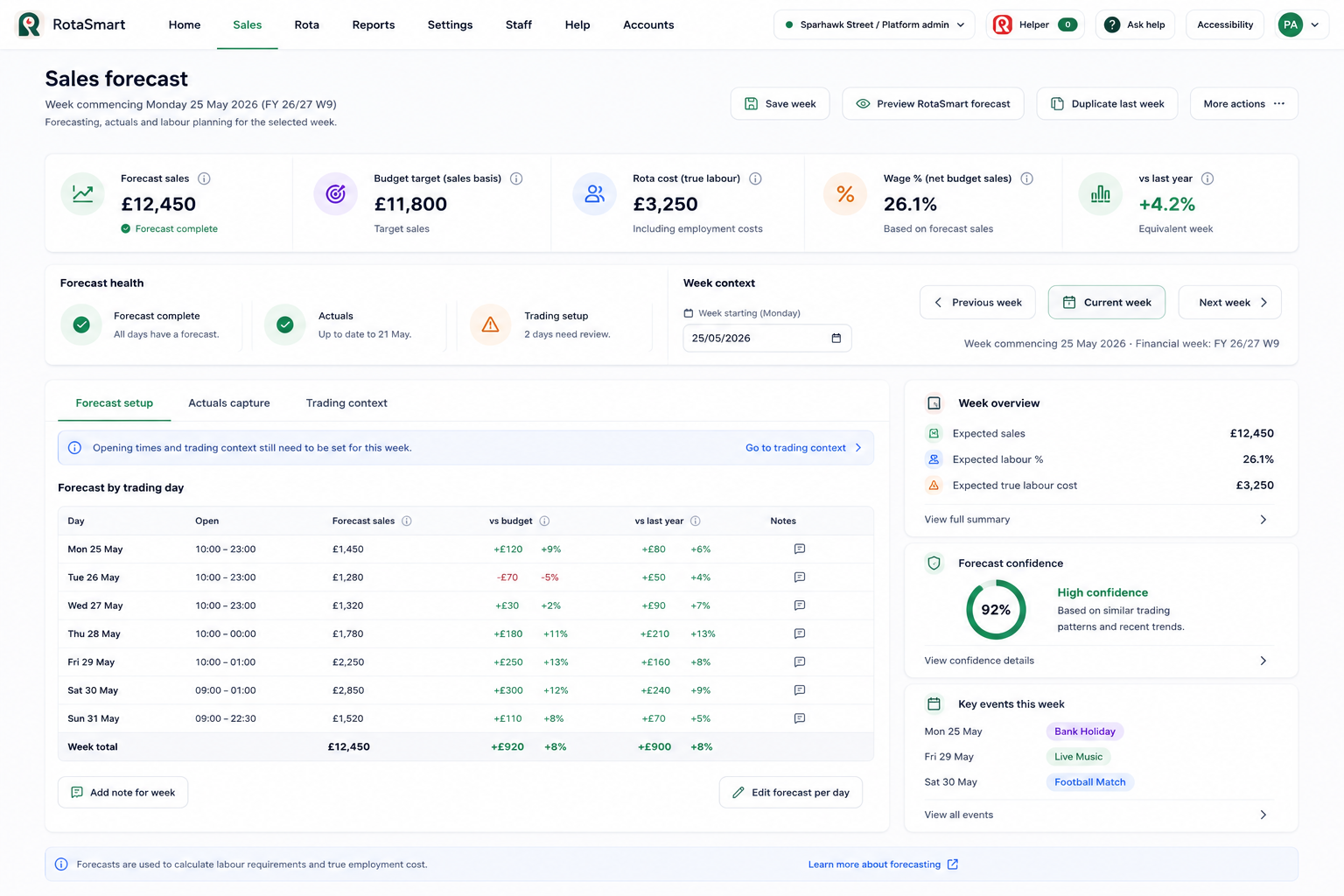
Forecast sales, trading context, and week events help managers plan daypart cover before shifts are placed.
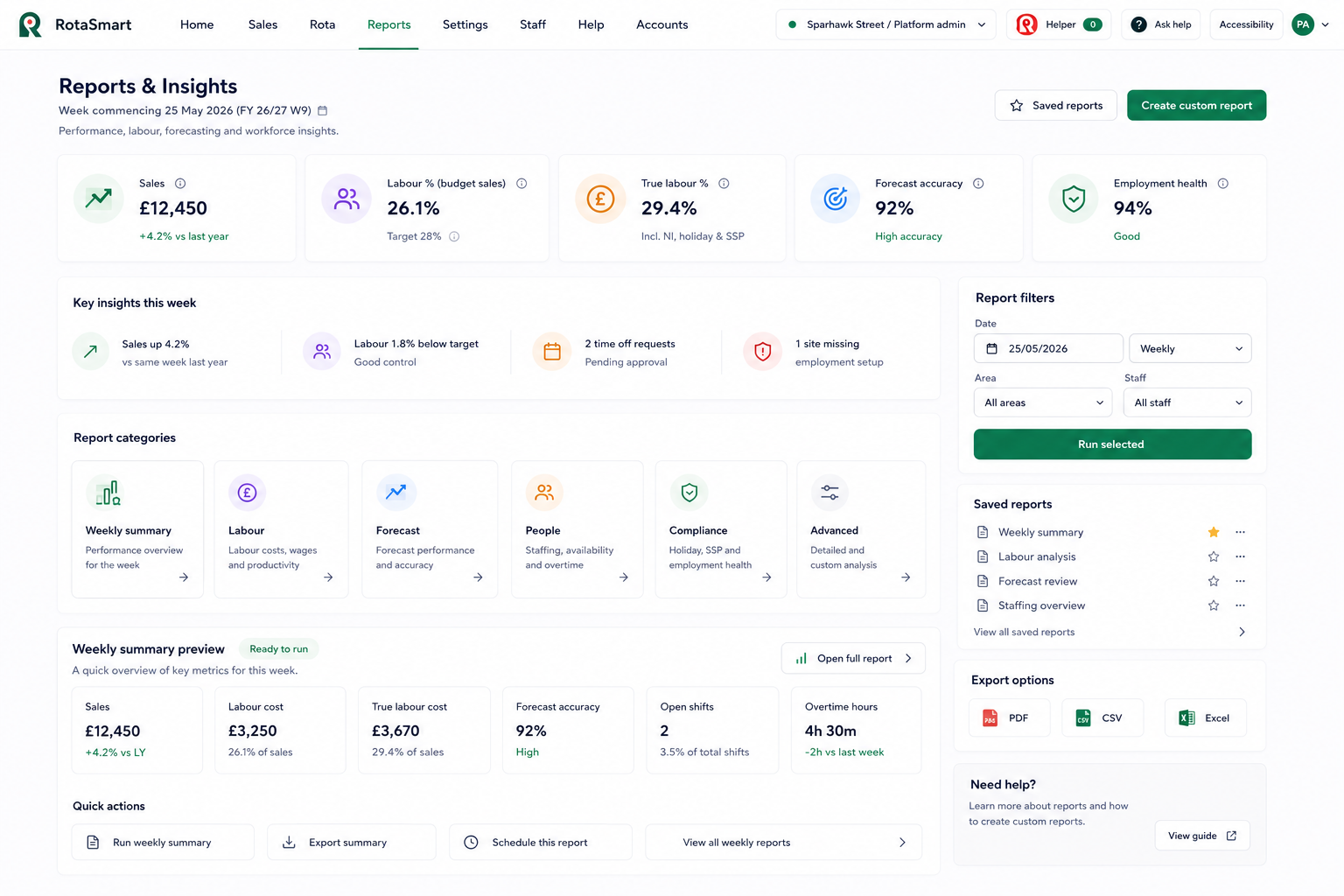
Reports keep sales, labour percentage, true labour, forecast accuracy, employment health, and weekly summary in one review.
Cafe labour looks unstable when managers judge it as one flat number.
Use a labour percentage that reflects the cafe's sales mix and operating model.
Separate breakfast, lunch, and quieter afternoons instead of judging the whole day as one block.
Keep stronger cover on the peaks and move waste out of the quieter periods.
Use the result to tighten the next rota instead of repeating weak habits.
There is no universal cafe number.
Because a cafe may still need a minimum team for service, prep, and close-down even when sales are softer.
Forecast the dayparts properly, protect breakfast and lunch cover, and remove waste from the quieter afternoon hours first.
Bring a real week and review forecast, labour plan, rota cost, wage % and staff flow.
 RotaSmart Team