01
Review the current baseline
Check forecast sales, planned labour cost, and the sessions that actually make the week profitable.

The practical way to reduce labour cost is to remove waste from the wrong hours, not strip cover from the shifts that protect sales and service.
The sequence matters: identify the waste first, then protect the cover that earns the week.
Check forecast sales, planned labour cost, and the sessions that actually make the week profitable.
Look for quiet periods, duplicated cover, early starts, late finishes, and work scheduled in the wrong part of the day.
Protect the peak sessions first, then tighten the hours that are not earning their keep.
Sign-off and payroll review should show where labour drifted so the next rota gets cleaner.
Most overspend is repetitive and small, which is why it is easy to miss until margin drifts.
The expensive problems are often the repeated small ones rather than one dramatic mistake.
A good saving leaves the venue easier to run, not more brittle.
Reduce waste where trade is soft instead of weakening the sessions that actually sell.
Use cross-trained staff carefully so the rota stays flexible without hiding impossible workloads.
Attendance exceptions and actual labour should feed the next week's decisions, not sit in hindsight only.
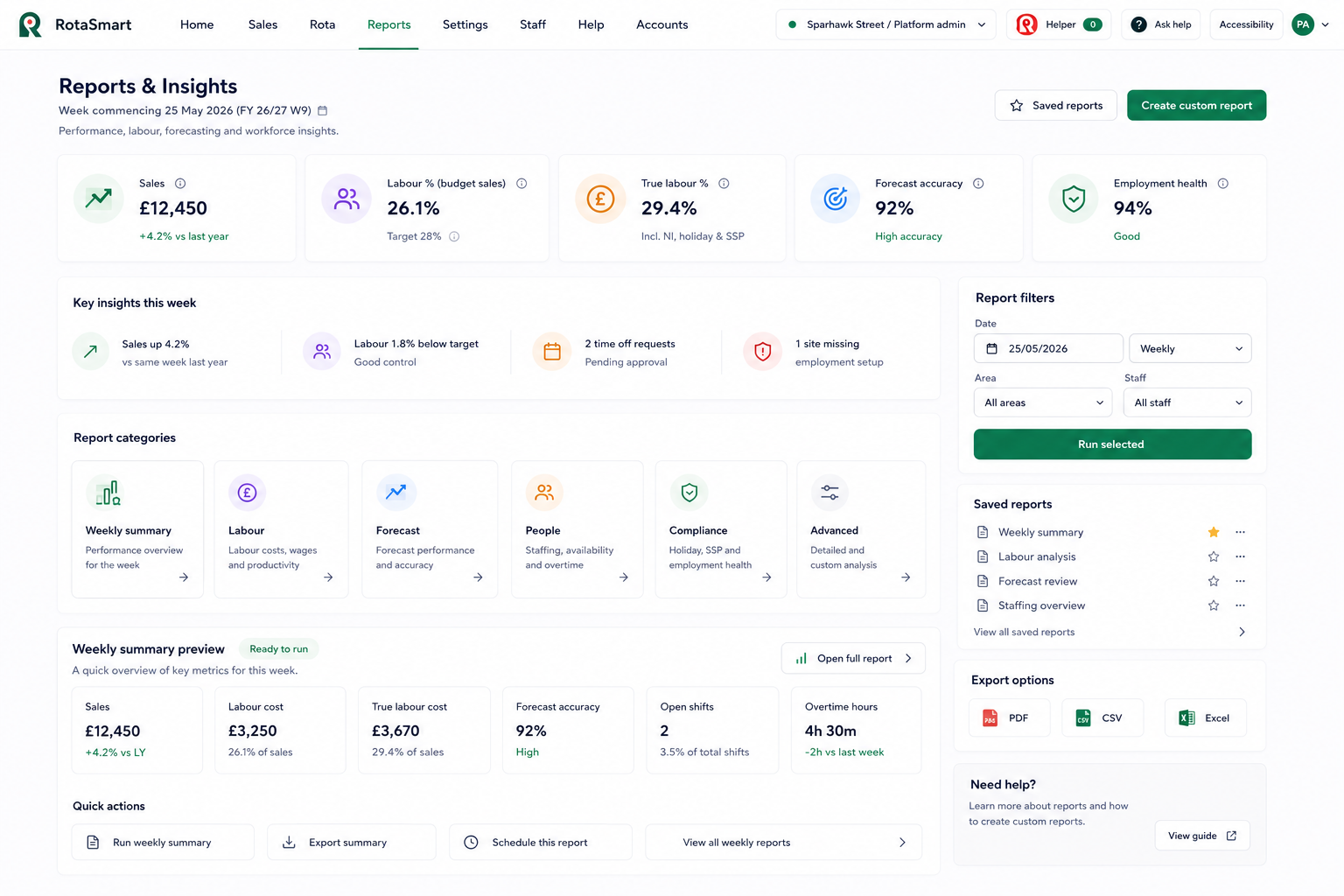
Reports keep sales, labour percentage, true labour, forecast accuracy, employment health, and weekly summary in one review.
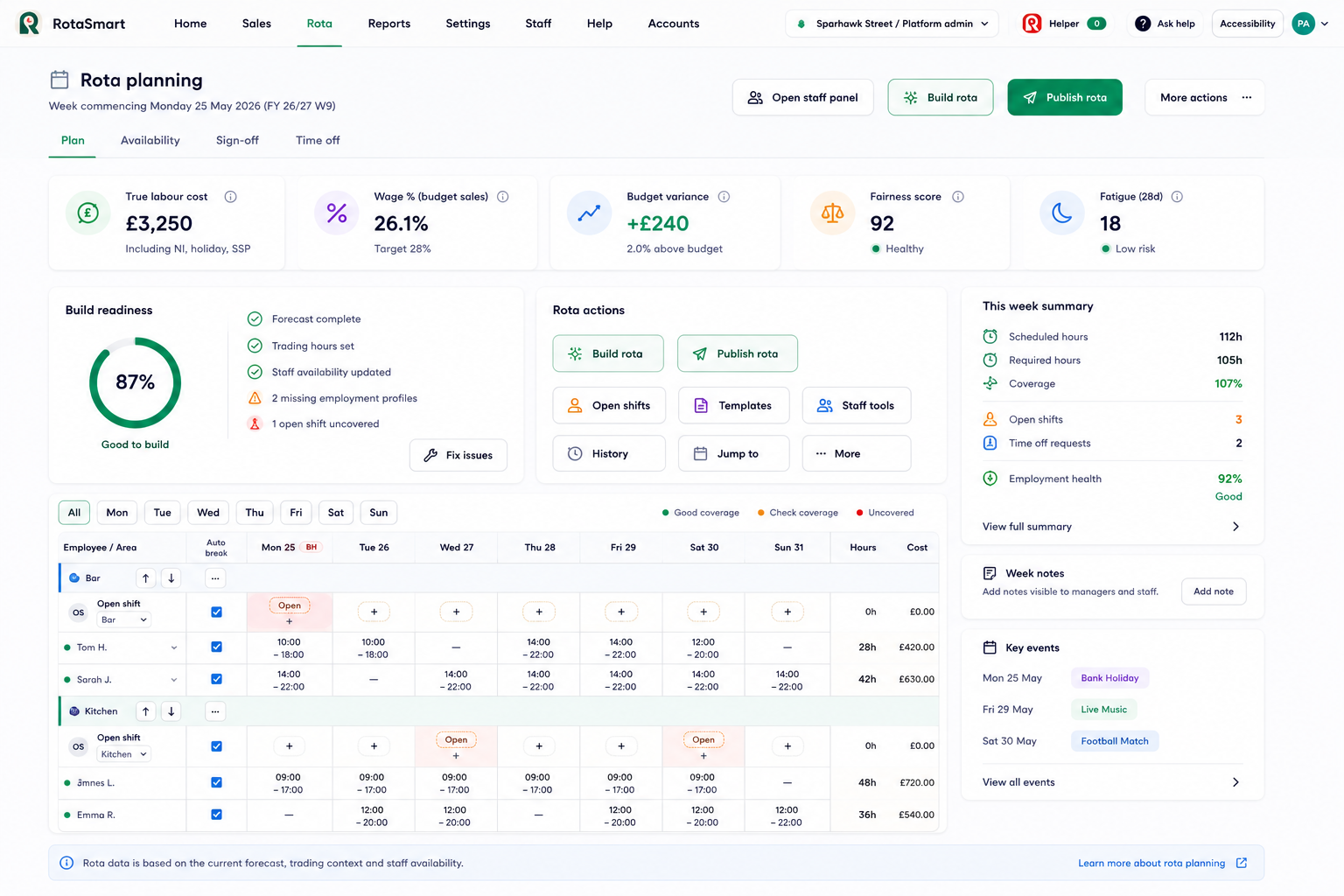
Managers can edit a live rota with true labour cost, wage percentage, build readiness, open shifts, and events visible.
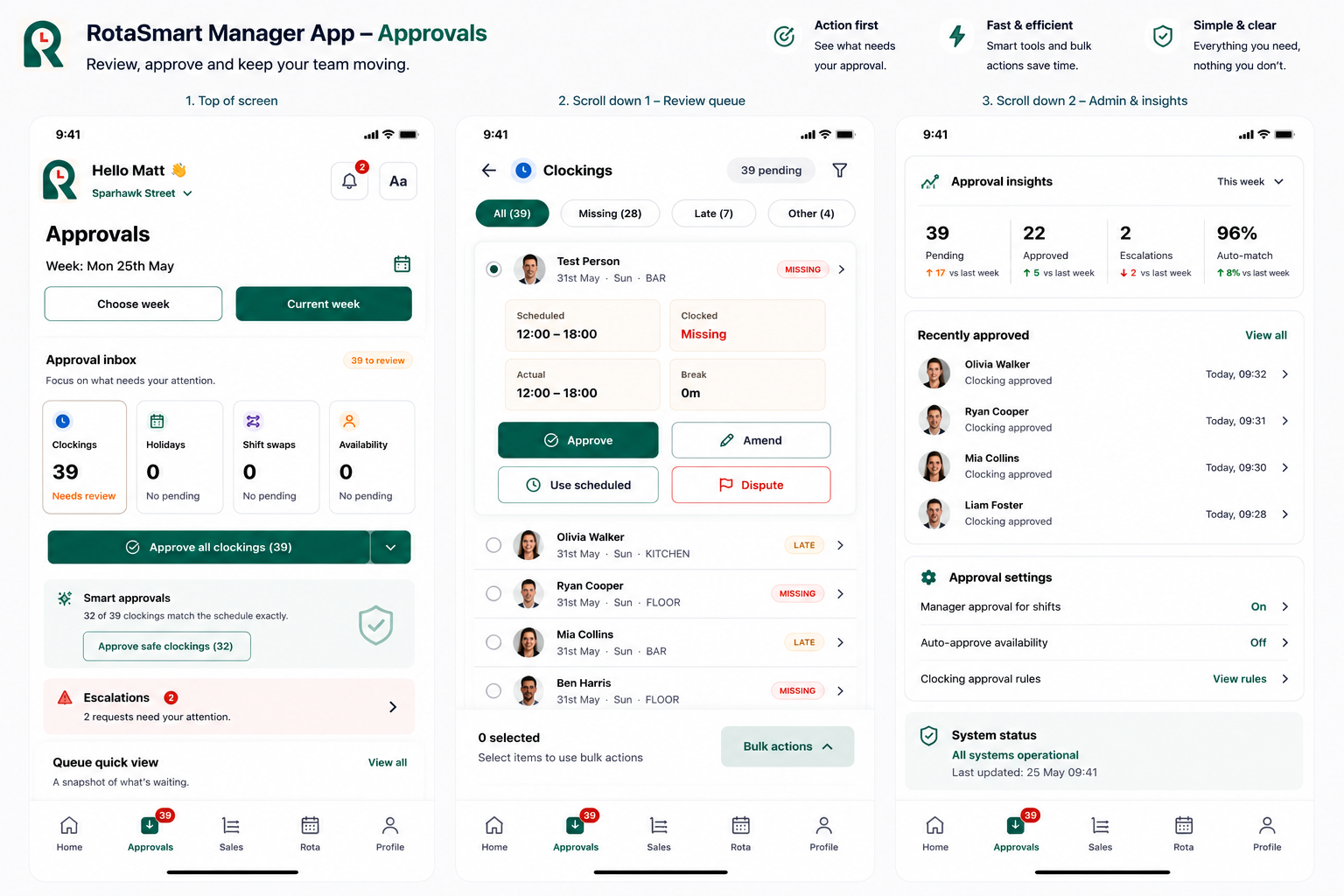
Clockings, missing entries, late shifts, escalations, and recently approved items stay in the manager approval flow.
The expensive mistake is cutting visible peak cover while ignoring the small leaks around the week.
Review forecast sales, planned labour, and the wage percentage before you change the rota.
Look for quiet-period overstaffing, long finishes, and repeated copied shifts that no longer fit demand.
Keep the labour that protects the busiest sessions and move the waste out of the wrong periods.
Use actual labour and exceptions to tighten the next rota instead of repeating the same drift.
Remove waste from quiet periods, shift timing, and attendance drift first.
It often sits in overstaffed slow periods, staff starting too early, staff finishing too late, weak break discipline, and copied shifts that no longer match demand.
Because that is the moment managers can still shorten, move, or redesign shifts before the cost becomes fixed.
Bring a real week and review forecast, labour plan, rota cost, wage % and staff flow.
 RotaSmart Team