RotaSmart
Staffing forecast guide

How To Forecast Staffing Levels In Hospitality

Forecast staffing levels by starting with expected trade, then translating that demand into cover by role, daypart, and shift length before the rota is built.

Forecast the week before you build the rota
Weekly view
See forecast, demand, rota cost, wage percentage, and staff changes in the same weekly view.
Start point
Forecast trade
Sales, bookings, events, and weather shape the staffing brief.
Translate into
Cover by period
Work out who you need, where, and when.
Commercial check
Wage % before publish
Check cost while the shifts can still move.
Learn after
Compare forecast to actual
Next week's plan gets stronger when the review is disciplined.
Built by a hospitality operatorForecast, rota, and wage percentage in one weekly viewBuilt for pubs, bars, cafes, food-led venues, and small groupsStaff requests and shift changes stay controlled

Read the trading day before you staff it

Each period creates a different labour problem. Good forecasts make those changes visible before shifts are named.

Open
Set-up and prep

Opening cover often needs prep, deliveries, and set-up before the first customers arrive.

Peak
Service pressure

Lunch, after-work, or event peaks usually need overlap and faster service cover.

Quiet
Lean service

Quieter periods may need less service labour, but they can still carry prep, cleaning, or stock work.

Close
Finish properly

Late close, cashing up, kitchen shut-down, and cleaning should be planned deliberately rather than absorbed badly.

From forecast to staffing plan

The aim is to make the week easier to staff before the rota exists, not explain it afterwards.

01
Mark known pressure

Bookings, weather, local events, sport, or promotions should all be visible before shifts are placed.

02
Convert demand into roles

Work out the cover needed on bar, floor, kitchen, prep, and close-down instead of staffing every hour the same way.

03
Check the draft commercially

Review planned labour cost and wage percentage while the rota can still be shortened, moved, or opened up.

04
Review what really happened

Use actual trade and signed-off labour to improve the next week's staffing assumptions.

Checks worth making before the rota is published

If these are missing, the rota is being built on memory rather than a forecast.

Demand signals

Forecast quality improves when the same signals are reviewed consistently.
  • Recent sales by day and hour
  • Bookings and private events
  • Weather, seasonality, and local pressure
  • Availability, approved time off, and open shifts

What this looks like in RotaSmart

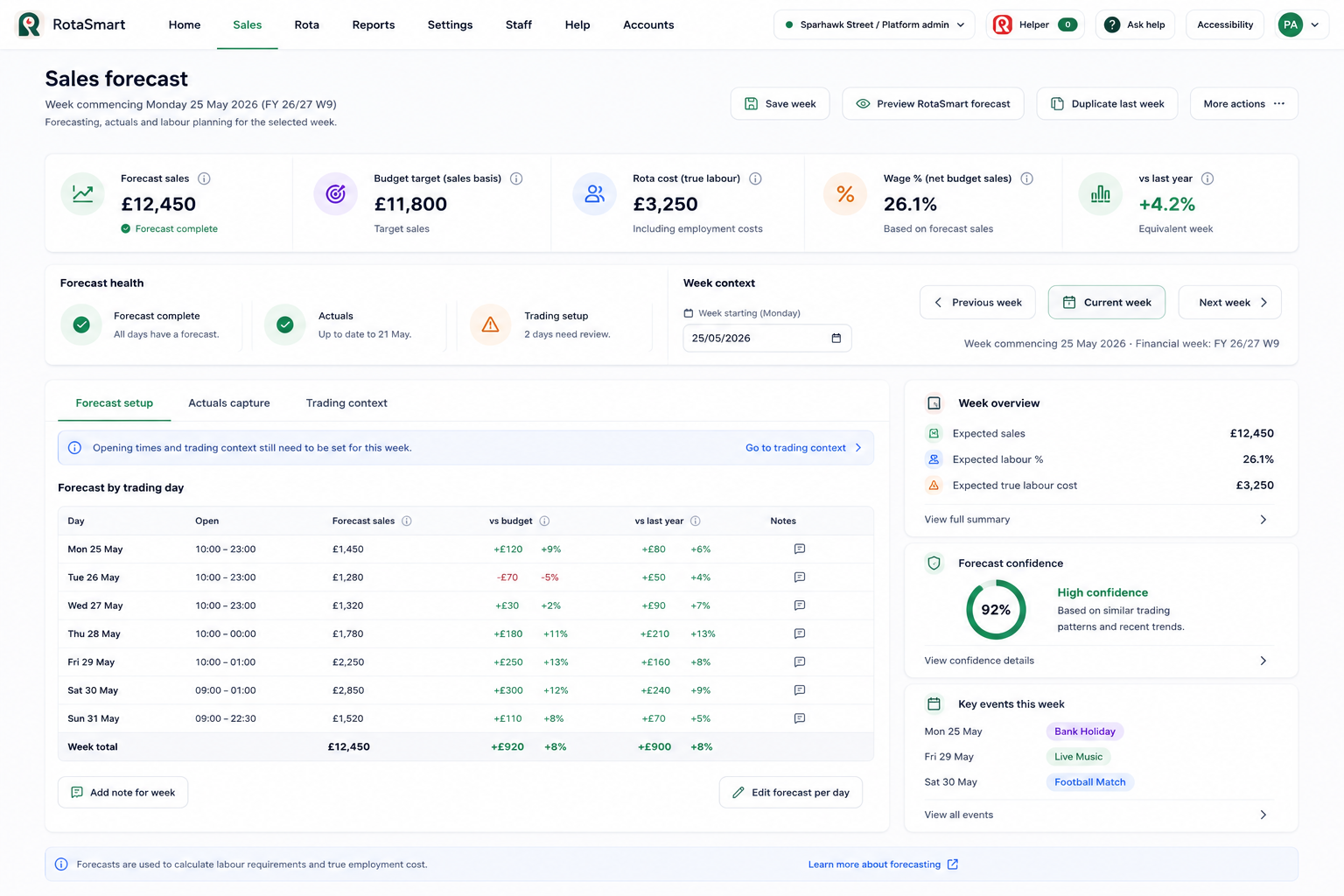
RotaSmart sales forecast screen showing forecast sales, budget target, rota cost, wage percentage, forecast health, and week context
Forecast and actuals sit before the rota decision

Forecast sales, budget target, rota cost, wage percentage, forecast health, and week context sit together before staffing decisions.
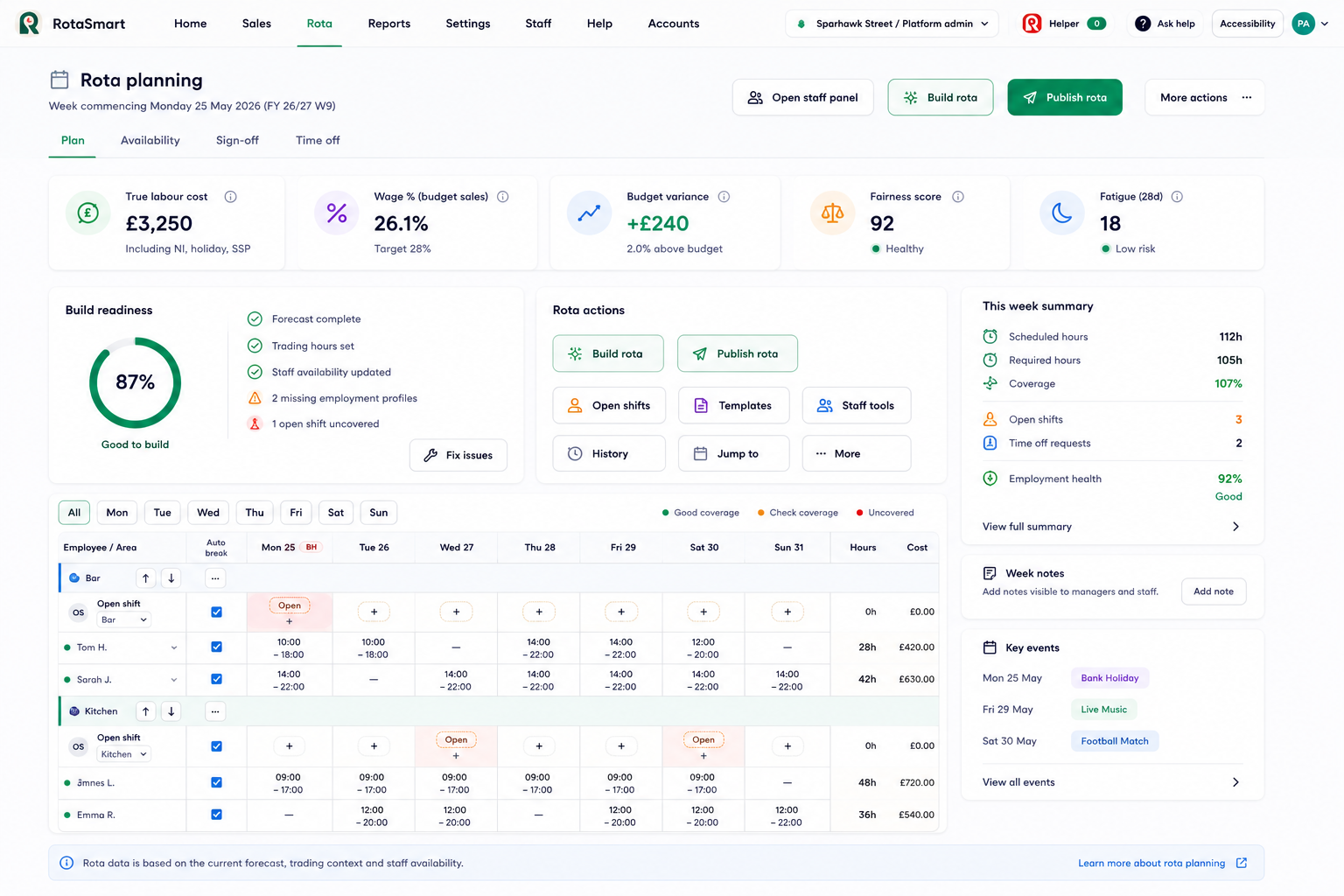
RotaSmart rota planning screen showing labour cost, wage percentage, build readiness, rota actions, and weekly rota grid
Build the rota with demand, hours, and cost in view

The live rota view keeps true labour cost, wage percentage, build readiness, open shifts, and events beside the rota grid.

Why staffing forecasts drift

Most staffing forecasts fail because managers start from opening hours or last week's shifts.

What should go into the forecast

Trade signals
Use sales history, bookings, weather, local events, and known pressure as demand inputs.
Role demand
Translate forecast trade into bar, floor, kitchen, prep, delivery, and close-down cover.
Shift timing
Move starts, finishes, and overlap around the real demand curve instead of relying on flat shifts.
People constraints
Check skills, availability, time off, and open shifts before the rota is shared.

What a better forecast changes

Peak protection
Put overlap where queue speed, service, and cash-driving sessions matter most.
Quieter hours
Keep slow periods lean without forgetting prep, deliveries, or clean-down work.
Manager speed
Build the rota faster because the week shape is already visible before scheduling starts.
Forecast accuracy
Use signed-off results to tighten the next plan instead of copying the last one.

A practical forecasting method

01
Forecast the trading week

Set expected sales, bookings, events, and trading context by day and hour.

02
Translate demand into labour

Decide which roles need cover in each trading period and how much overlap is useful.

03
Build the rota around the demand

Place shifts while labour cost and wage percentage remain visible.

04
Review the variance

Compare expected trade and signed-off labour to improve the next forecast.

Questions managers ask when forecasting staffing

How do you forecast staffing levels in hospitality?

Start with expected trade, break it into the periods that matter, turn that demand into cover by role, then check labour cost before the rota is published.

What should be separated before shifts are placed?

Separate the week by daypart, role, peak sessions, quieter periods, and close-down so the rota does not treat the whole day as one problem.

Why not just copy last week?

Because the reason for last week's trade may not repeat. Forecasting helps managers adjust the rota to this week's demand instead of last week's memory.

See forecast, demand, and rota cost together

Bring a real week and review forecast, labour plan, rota cost, wage % and staff flow.

Forecast and demand view
Rota builder and wage percentage
RotaSmart Team staff flow
Book a demo Start Free Trial