Midweek
Lean trade
Quiet sessions often need lean service cover with productive prep, stock, or cleaning work.

A pub rota should be built from the sales shape of the week, not last week's shift pattern.
The rota gets better when the week is treated as different trading problems instead of one repeating shift pattern.
Quiet sessions often need lean service cover with productive prep, stock, or cleaning work.
After-work trade can need staggered starts so labour is not wasted before the rush lands.
Lunch, evening, and close-down may all need different labour shapes on the same day.
Sport, live music, or private bookings can change the pub's normal labour pattern completely.
Use the forecast to decide where the pub is fragile first, then place named shifts.
Use the weekly sales shape rather than one total sales number for the whole week.
Work out the cover needed on bar, floor, kitchen, and manager shifts for the pressure periods.
Move labour out of the hours that do not justify it before you cut the cover that protects sales.
Compare forecast trade, planned labour, and actual labour so the next rota starts from better information.
If any of these change, the safest assumption is that the rota should change with them.
A copied rota often bakes in assumptions that no longer apply.
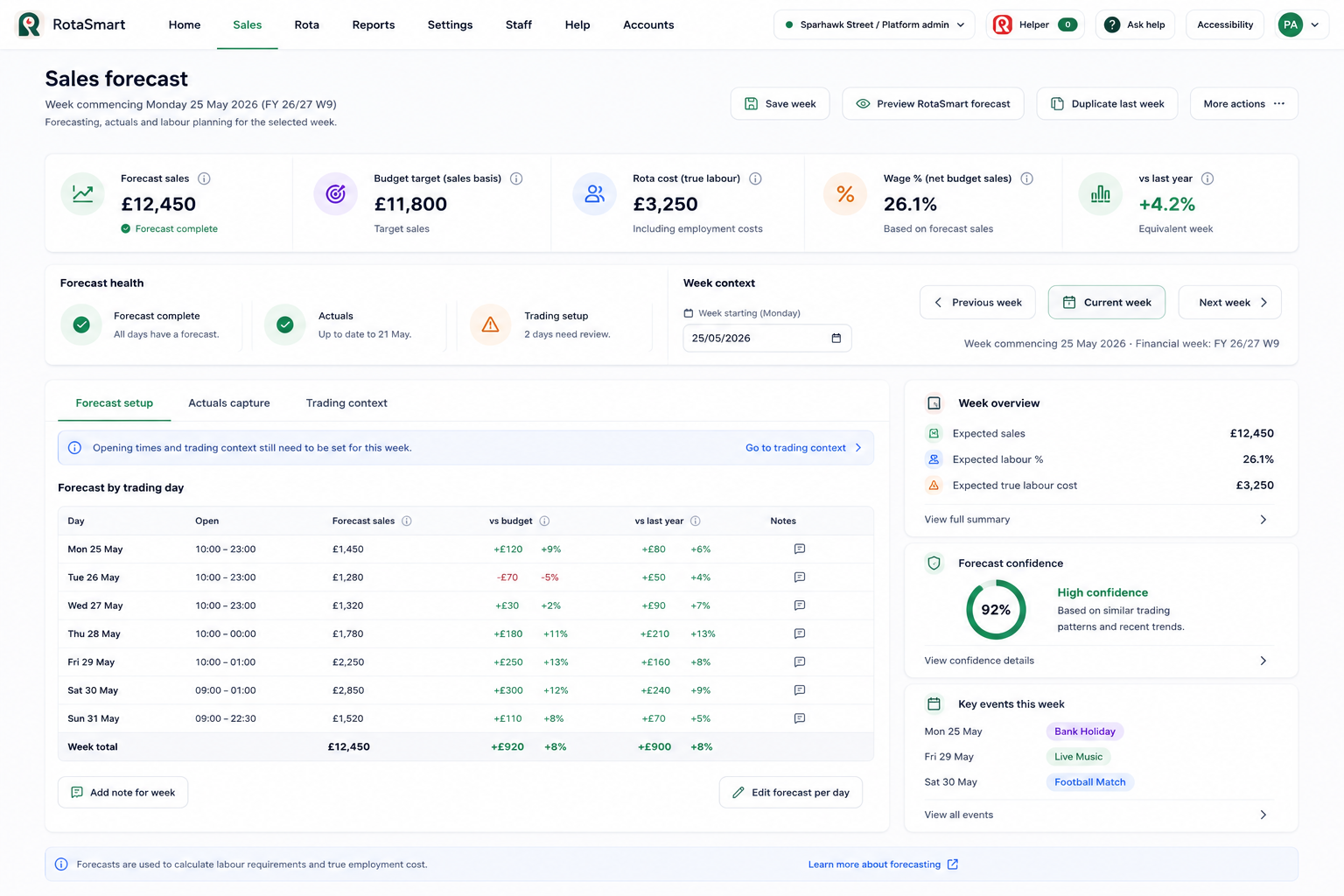
Forecast sales, budget target, rota cost, wage percentage, forecast health, and week context sit together before staffing decisions.
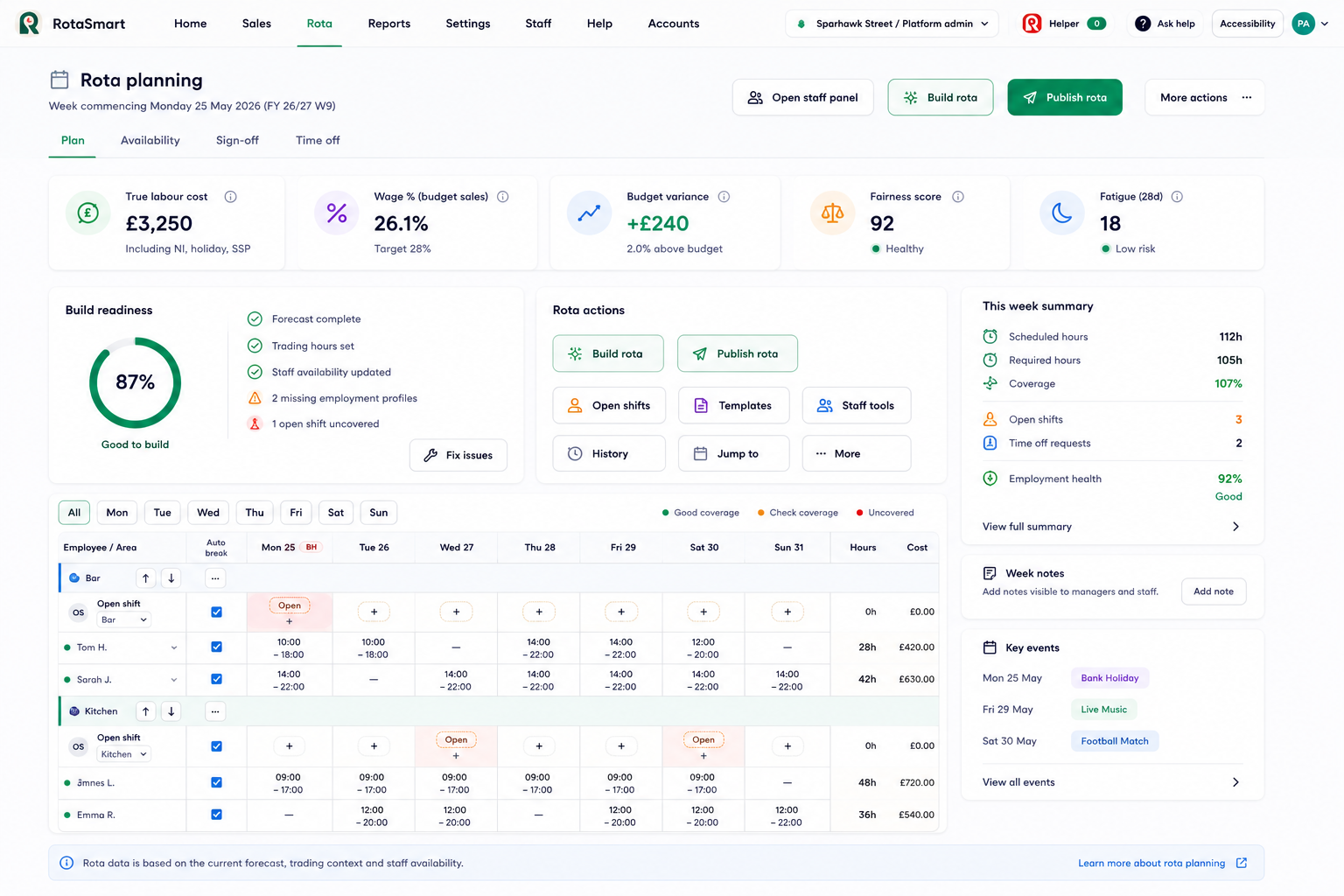
Weekend pressure, open shifts, wage percentage, and key events are easier to manage when they sit beside the rota grid.
A pub rota built from weekly averages will usually miss the real week shape.
Set expected sales by day and hour before placing shifts.
Work out which sessions need extra cover, overlap, or close-down time.
Place labour where the pub is busiest instead of flattening labour across the week.
Check the cost, fix the quiet-period waste, and only then publish the rota.
Forecast the trade pattern first, decide where the pub needs cover, then place shifts while planned labour cost stays visible.
Because a strong Friday can hide a weak Monday, and a copied weekly pattern often puts labour in the wrong places.
Check the busiest sessions, quiet-period waste, role cover, open shifts, and the planned wage percentage against forecast sales.
Bring a real week and review forecast, labour plan, rota cost, wage % and staff flow.
 RotaSmart Team