RotaSmart
Pub labour cost guide

How Much Should Labour Cost Be In A UK Pub

There is no single pub labour number that fits every site.

Judge labour against the pub and the week
Weekly view
See forecast, demand, rota cost, wage percentage, and staff changes in the same weekly view.
Answer
Use a weekly target
The number only means something when it fits the pub and the week.
Big driver
Sales mix
Wet-led and food-led pubs rarely carry the same labour percentage.
Key check
Planned labour / forecast sales
Judge labour before the rota is shared, not after payroll.
Best use
Protect margin
Cut waste from the wrong hours without weakening the busiest sessions.
Built by a hospitality operatorForecast, rota, and wage percentage in one weekly viewBuilt for pubs, bars, cafes, food-led venues, and small groupsStaff requests and shift changes stay controlled

A simple pub labour percentage check

The number matters only if it leads to a decision while the rota can still move.

Forecast sales
£13,250

Use forecast sales for the week you are planning, not last week's actuals.

Planned labour
£3,265

Add the planned labour cost from the draft rota while shifts are still editable.

Labour percentage
24.6%

Planned labour cost divided by forecast sales gives the labour percentage for the plan.

Decision
Check the day shape

If the weekly percentage is fine but Monday is bloated and Friday is tight, move labour instead of adding labour.

A stronger weekly labour routine

Use the same sequence each week so the number stays comparable instead of becoming a guess.

01
Separate pub type from pub week

Decide whether the pub is mainly wet-led, food-led, event-led, or mixed before you judge the number.

02
Forecast the demand shape

Break out Friday, Saturday, sport, and quieter periods instead of using one weekly average.

03
Place cover around peaks

Protect the sessions that drive revenue before you cut quieter labour.

04
Review the result after the week

Compare planned labour with signed-off labour so the next target is based on what really happened.

What to review before changing the target

If one of these inputs changes, the right labour percentage can change with it.

Commercial context

The weekly labour target should reflect how the pub actually trades.
  • Wet sales versus food sales
  • Minimum management and close-down cover
  • Event nights, live sport, or garden trade
  • Quiet days that still need basic operating cover

What this looks like in RotaSmart

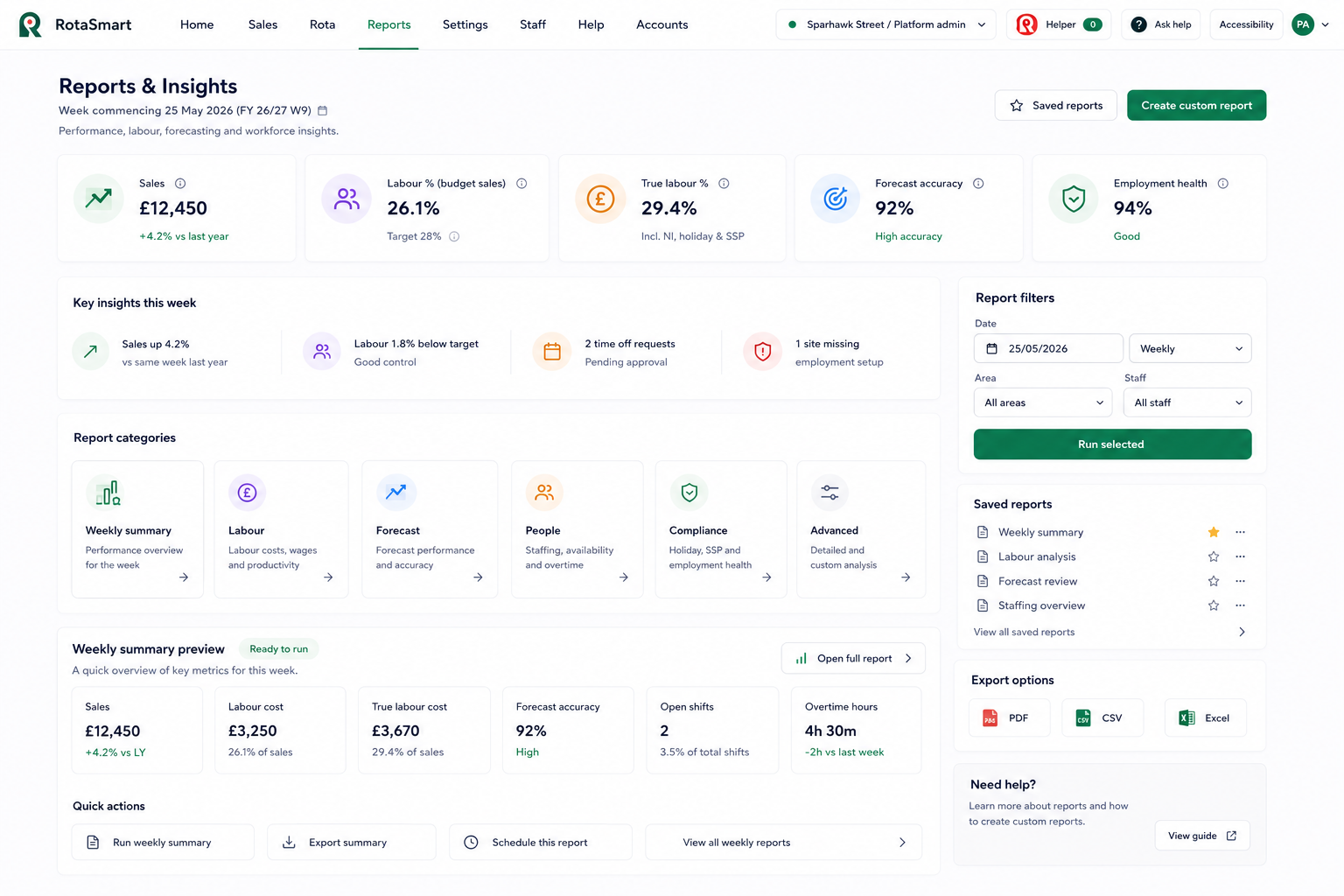
RotaSmart reports screen showing sales, labour percentage, true labour, forecast accuracy, employment health, and weekly summary
Keep true labour cost and wage percentage together

Reports keep sales, labour percentage, true labour, forecast accuracy, employment health, and weekly summary in one review.
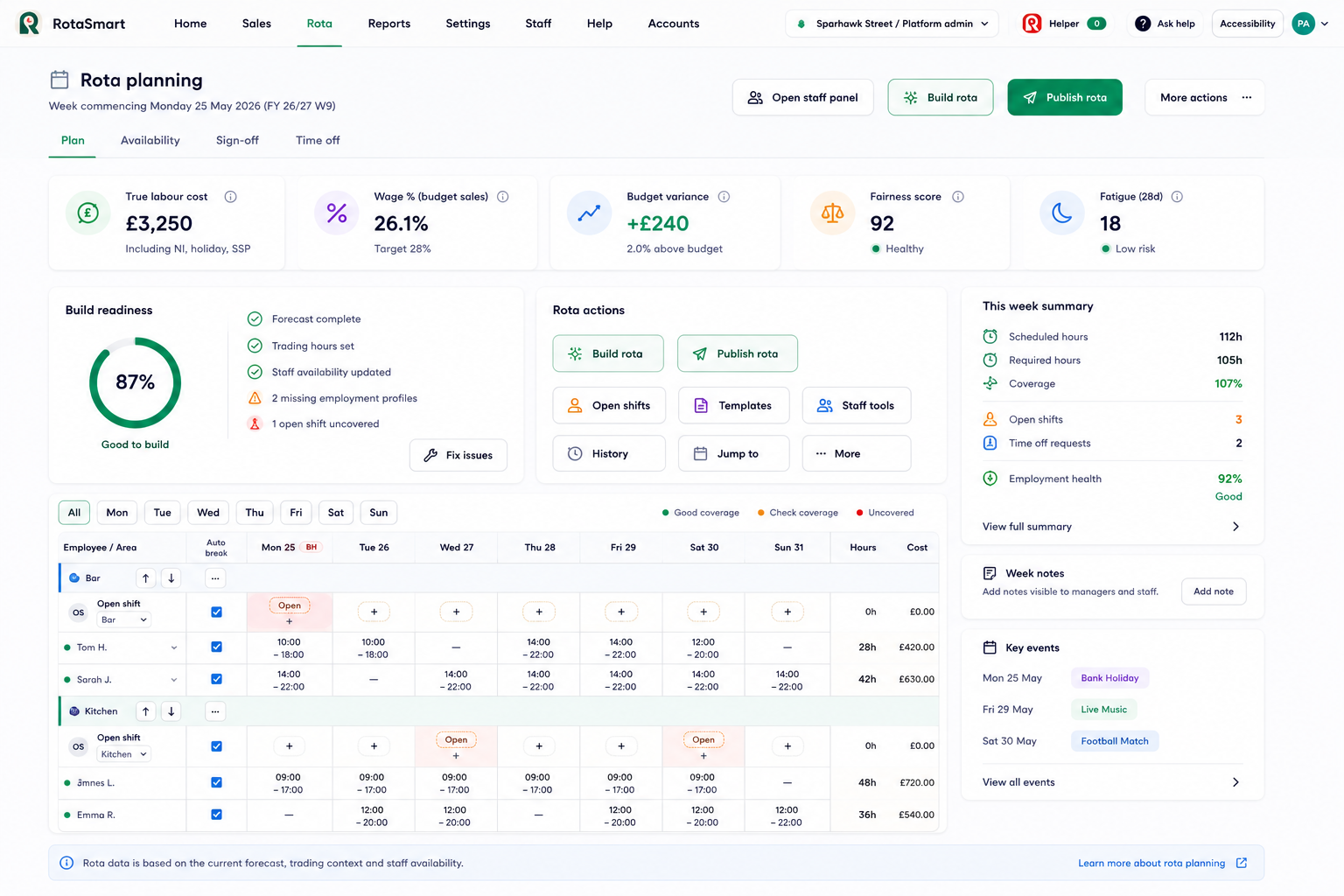
RotaSmart rota planning screen showing weekly shifts, open shifts, wage percentage, labour cost, and key events
Shape the pub week around weekend pressure

Weekend pressure, open shifts, wage percentage, and key events are easier to manage when they sit beside the rota grid.

Start with the right labour question

The wrong question is what number a pub should hit in theory.

What actually moves pub labour cost

Sales mix
Wet-led, food-led, event-led, and garden-led trade create very different staffing pressure.
Minimum cover
Quiet days can still look expensive because the pub needs an opener, duty cover, and close-down.
Opening pattern
Long opens, prep, handovers, and late finishes can push the number up without the pub being badly run.
Weekly trade shape
A strong Friday can hide a bloated Monday, so the day-by-day view matters as much as the weekly total.

What the benchmark should help you improve

Margin control
See whether labour is high because sales are soft or because hours are sitting in the wrong periods.
Peak protection
Keep the sessions that drive revenue properly covered before cutting quieter labour.
Cleaner review
Understand whether the week drifted at draft stage, during service, or after sign-off.
Better decisions
Move hours with more confidence because the benchmark is tied to the pub model, not a generic rule.

How to use the number in the rota build

01
Set a realistic target

Use a weekly labour percentage that fits the pub type, not a generic rule.

02
Forecast each day

Split busy trading periods from quieter ones before you place shifts.

03
Check the draft rota

Review planned labour cost against forecast sales while the rota can still change.

04
Review actuals

Use signed-off labour and actual trade to improve the next week's target.

Questions pub operators ask about labour cost

How much labour cost is normal in a UK pub?

It depends on the pub.

Should I judge labour by week or by day?

Both. The weekly target matters, but daily and hourly trade shape explains whether labour is in the right place.

What is the best way to control pub labour cost?

Forecast the week first, build the rota around the real pressure points, and check planned labour cost before shifts are published.

Find the labour drift in a real week

Bring a real week and review forecast, labour plan, rota cost, wage % and staff flow.

Forecast and demand view
Rota builder and wage percentage
RotaSmart Team staff flow
Book a demo Start Free Trial