
RotaSmart blog
How pubs can plan pre-match trade during the 2026 World Cup
How UK pubs and bars can forecast pre-match demand, staff the right hours and protect wage percentage during World Cup fixtures.
Operational insight
The useful moment is before publish, when managers can still move hours, protect peaks, and keep wage percentage under control.
Operator checklist
- Set expected sales for the week.
- Check planned labour cost before publishing.
- Review quiet-period cover separately from peak cover.
- Record the reason for any planned overspend.
Quick answer
World Cup fixtures do not only create demand at kick-off. Many pubs need extra cover in the one to two hours before the match, then a different plan for half-time, post-match and close-down.
Key takeaways
- Start with the pre-match window
- Build the rota around match phases
- Protect wage percentage without weakening the peak
- Plan for bookings and walk-ins
- Use the event to improve the next one
Major football fixtures can change the whole shape of a trading day. The risk for pubs is treating a match like a normal evening with a few extra staff added at the top.
The better approach is to plan the day by event phase: pre-match arrival, kick-off, half-time, post-match dwell time and close-down. That gives managers a more realistic view of sales, staffing, wage percentage and service pressure.
Start with the pre-match window
Recent industry reporting points to strong advance demand for England World Cup fixtures, with pub bookings for the opening England match reported well above a typical trading day. That does not mean every pub will see the same uplift, but it does show the planning risk: live sport can pull trade forward before the match starts.
For a pub or bar, the key question is not just "How busy is kick-off?" It is:
- When do groups arrive?
- Are they eating, drinking or both?
- How long will they stay after the match?
- Does the event change kitchen prep, bar speed or door control?
- Does the rota protect close-down?
Use hospitality sales forecasting to shape the expected day before assigning shifts.
Build the rota around match phases
A match-day rota should usually include:
Bar cover before kick-off; Food runners or floor support if pre-match meals are expected; Manager or supervisor cover during arrival and peak service; Half-time bar pressure; Post-match clear-down and glass collection; A closing team that is not already exhausted from the peak.
RotaSmart's rota builder helps managers place these shifts against the forecast rather than copying a normal Friday or Saturday pattern.
Protect wage percentage without weakening the peak
Live sport can tempt managers into overstaffing the full day. That protects service, but it can also push wage percentage too high if the extra hours sit outside the real demand window.
Use shorter, phase-specific shifts where possible. For example, a bar support shift might run from 90 minutes before kick-off until shortly after half-time, while a close-down shift might start later.
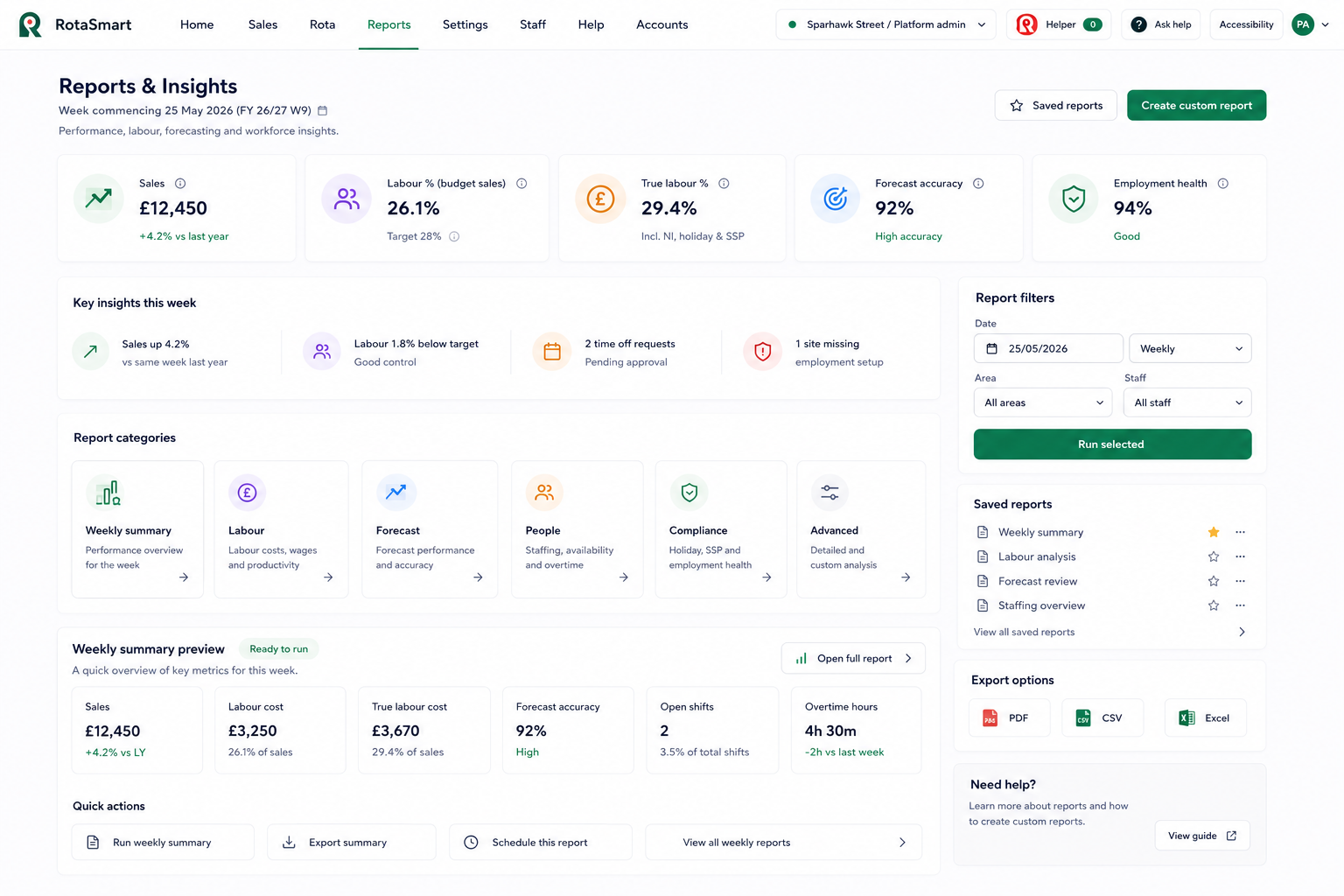
The hospitality labour cost control view keeps planned labour cost and wage percentage visible before the rota is shared.
Plan for bookings and walk-ins
Bookings are helpful, but pubs should not rely on them as the whole demand picture. Tournament fixtures can bring walk-ins, standing trade and late decisions, especially if weather is good or the match result creates a longer stay.
Before publishing the rota, check:
Booked covers; Normal same-day trade; Local competition from other venues; Weather; Screen capacity and standing areas; Food service cut-off times.
Use the event to improve the next one
After the fixture, record what happened. Compare forecast sales with actual sales by hour, not just the full-day total. If the pre-match window was under-forecast, update the next event profile. If post-match trade dropped quickly, avoid carrying too much labour too late next time.
RotaSmart's forecast, rota and labour views are designed to make that review easier, so the next match-day plan starts from evidence rather than memory.
Want to plan World Cup fixtures without losing control of labour cost? Book a demo and walk through a match-day forecast, rota and wage percentage check.
Want to see this on your own week?
Walk through forecast, rota build, labour cost, wage percentage, and staff app flow with RotaSmart.