
RotaSmart blog
Digital transformation and contactless service in hospitality
How contactless ordering, digital menus and connected systems change staffing patterns in cafes, pubs and bars.

Operational insight
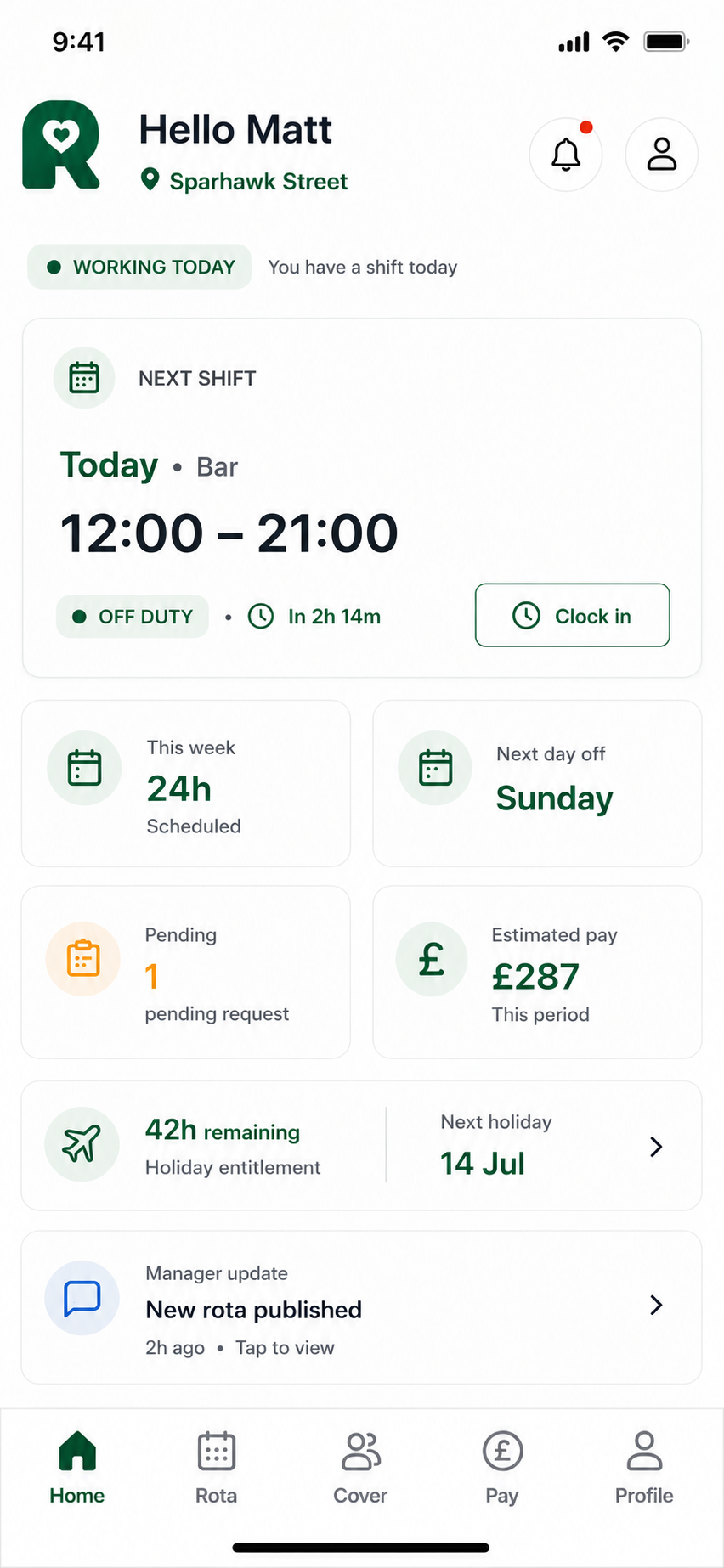
Staff changes are easier to manage when requests, offers, swaps, availability, and clocking stay connected to the week.
Operator checklist
- Check availability before filling difficult shifts.
- Keep time off and rota changes in an approved route.
- Review late finishes, fairness, and fatigue risk.
- Use signed-off actuals before payroll review.
Quick answer
Digital menus and contactless payment can speed up service, but they change what staff do. Rota planning needs to shift from order-taking assumptions to running, hosting and guest support.
Key takeaways
- The case for contactless
- Digital menus and accuracy
- How rota planning changes
Guests are increasingly comfortable ordering, paying and checking information digitally. QR menus, contactless payments and connected POS systems can reduce friction, especially in busy casual venues.
But digital service does not remove the need for people. It changes where people add value.
The case for contactless
Contactless ordering can reduce queue pressure and speed up table service. In the right venue, guests can order another drink without waiting for a server, and staff can spend more time hosting, running food and solving issues.
That can improve service, but only if staffing is planned around the new flow.
Digital menus and accuracy
Digital menus can update prices, availability, allergens and descriptions faster than printed menus. They can also support upselling and customisation.
The risk is that teams assume technology automatically reduces labour. In practice, digital ordering can shift pressure to bar production, kitchen pass, runners and guest support.
How rota planning changes
Managers should review:
- whether order-taking hours can move into running or hosting;
- whether bar and kitchen production need more cover at peaks;
- whether staff need training on devices, menu changes and guest support;
- whether digital data can improve demand forecasts.
RotaSmart helps connect these operational changes to the weekly plan. Use sales forecasting and the rota builder to adjust staffing as ordering behaviour changes.
Modernising service? Book a demo and see how RotaSmart keeps staffing aligned with new digital workflows.
Want to see this on your own week?
Walk through forecast, rota build, labour cost, wage percentage, and staff app flow with RotaSmart.